
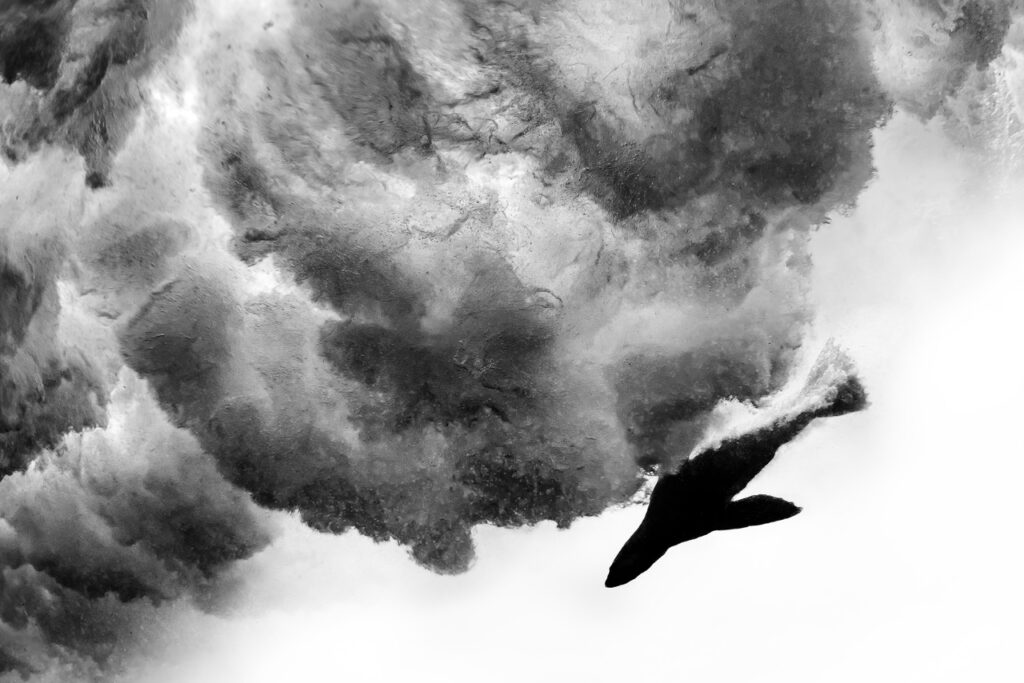
Portrait winner and Underwater Photographer of the Year 2026
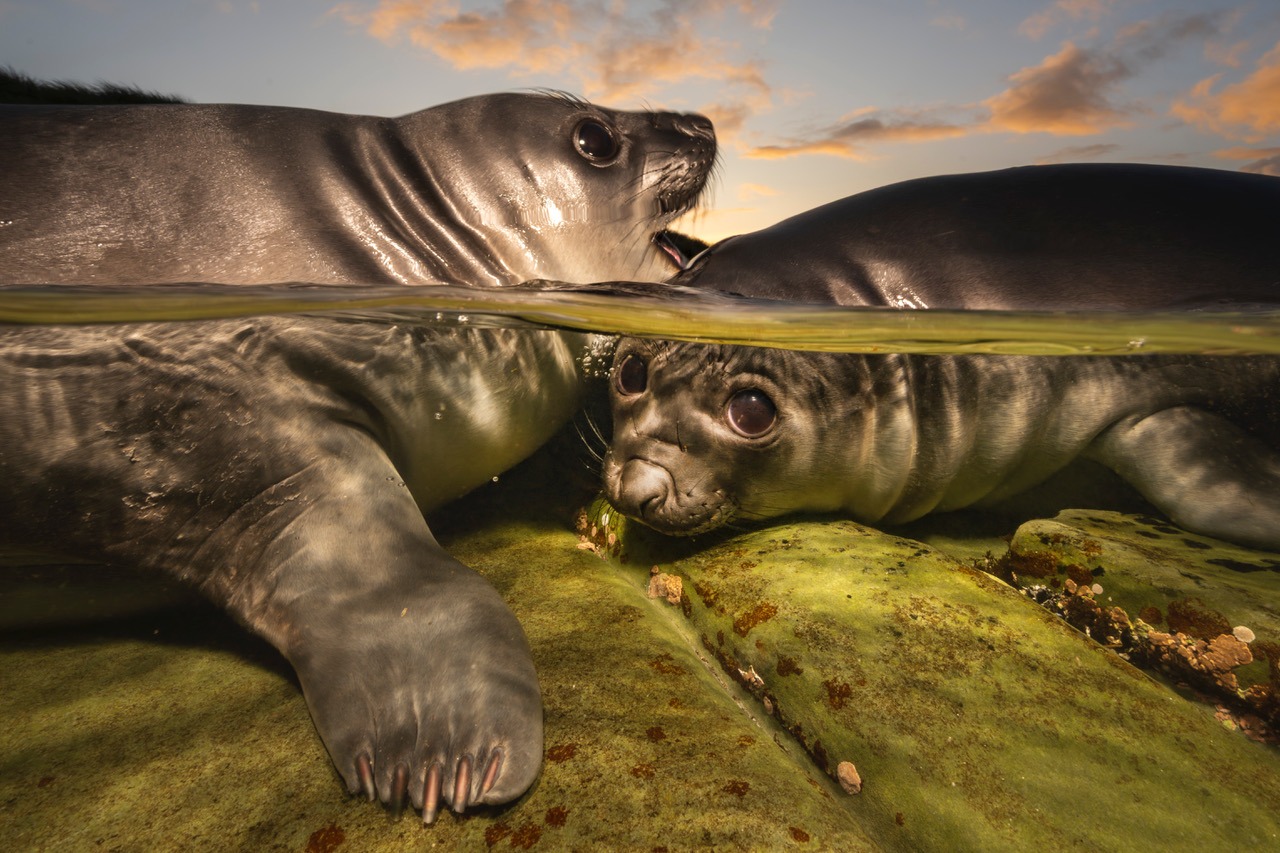
Rockpool Rookies by Matty Smith
Sealion Island, Falklands
Once several weeks old and weaned from their mother’s milk, elephant seal pups are abandoned by their parents on shore, left to navigate life alone. On Sealion Island in the Falklands, I watched dozens of them clamber over one another in shallow rockpools, awkwardly learning to swim, and quite engaging to my presence. I’d come here for this moment, to witness and photograph their first solo lessons in life. On the very first evening of my arrival, the sky ignited with colour. I donned my dry suit and rushed into the water, capturing a handful of frames before the light vanished. It turned out to be the defining moment of the trip, and I’m glad I didn’t hesitate.
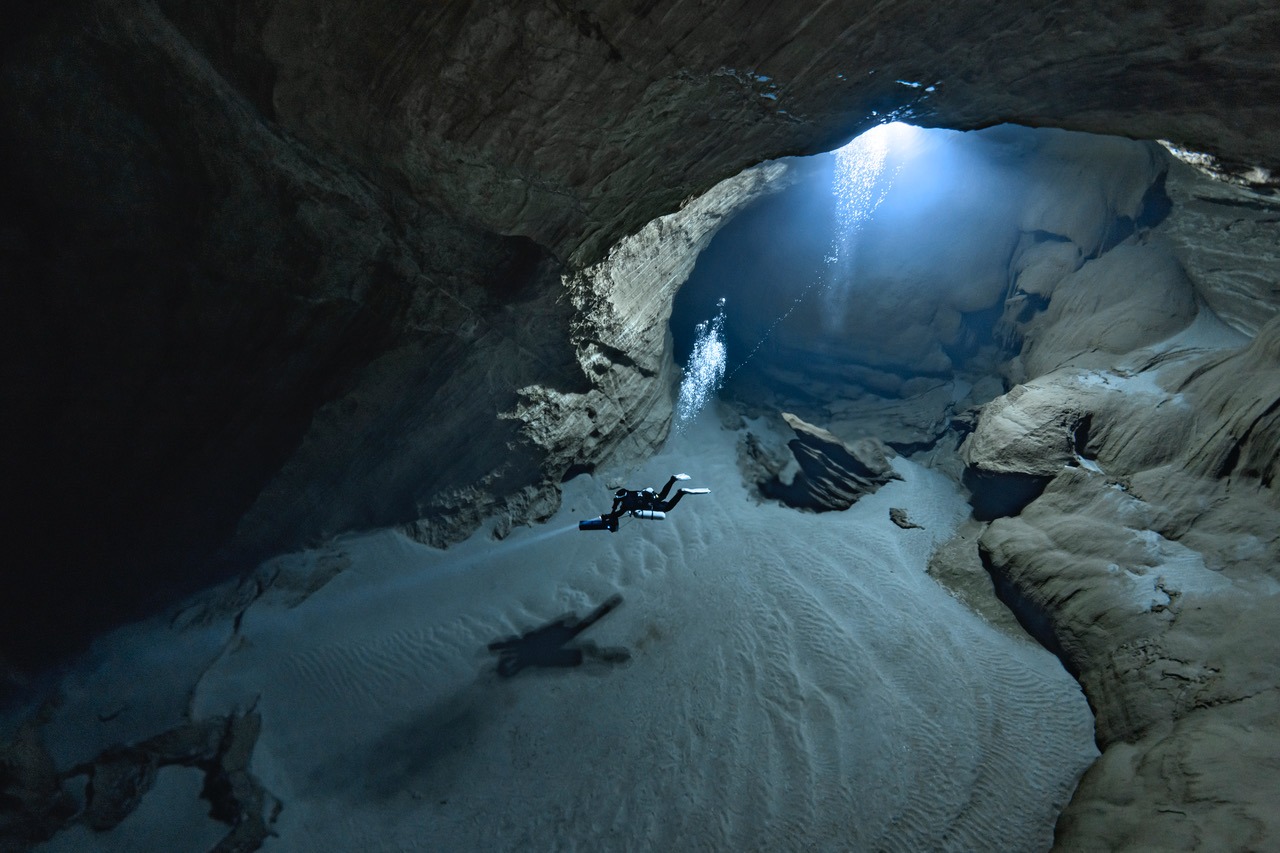
Wide Angle, third place
Halocline by Alex Dawson
Bue Marino cave, Sardinia
This image was shot on the second dive in this cave. I realised that this space was where I wanted to do something special photographically. The biggest challenge was the halocline, where freshwater and saltwater meet and mix right at the diving depth, turning the water into a blur. It’s also quite far into the cave, about 30 minutes runtime with our powerful DPVs (Driver Propulsion Vehicles). The plan was to light up the space and get the perfect diver shadow on the bottom to create depth.
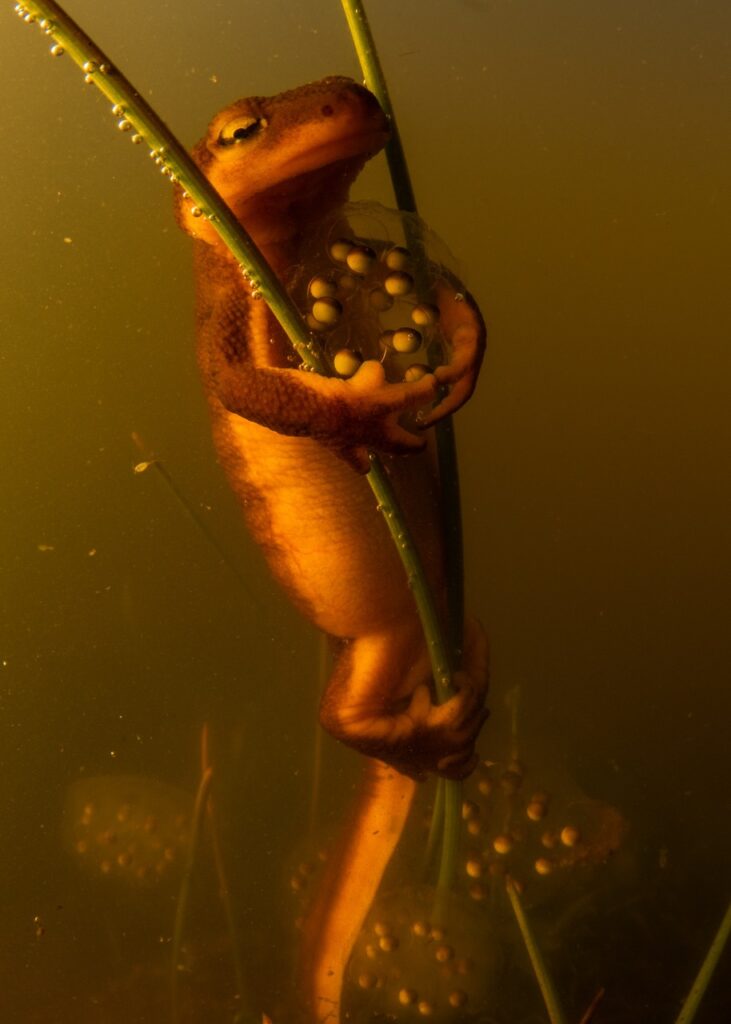
Behaviour, third place
Egg Clutcher by Anton Sorokin
San Francisco Bay, California
A female California newt holds on to vegetation and a previously laid clutch from another newt to anchor herself in place as she begins to lay her eggs. Her holding on to the eggs this way is a lucky coincidence but made for an exciting photo opportunity.
Portrait, third place
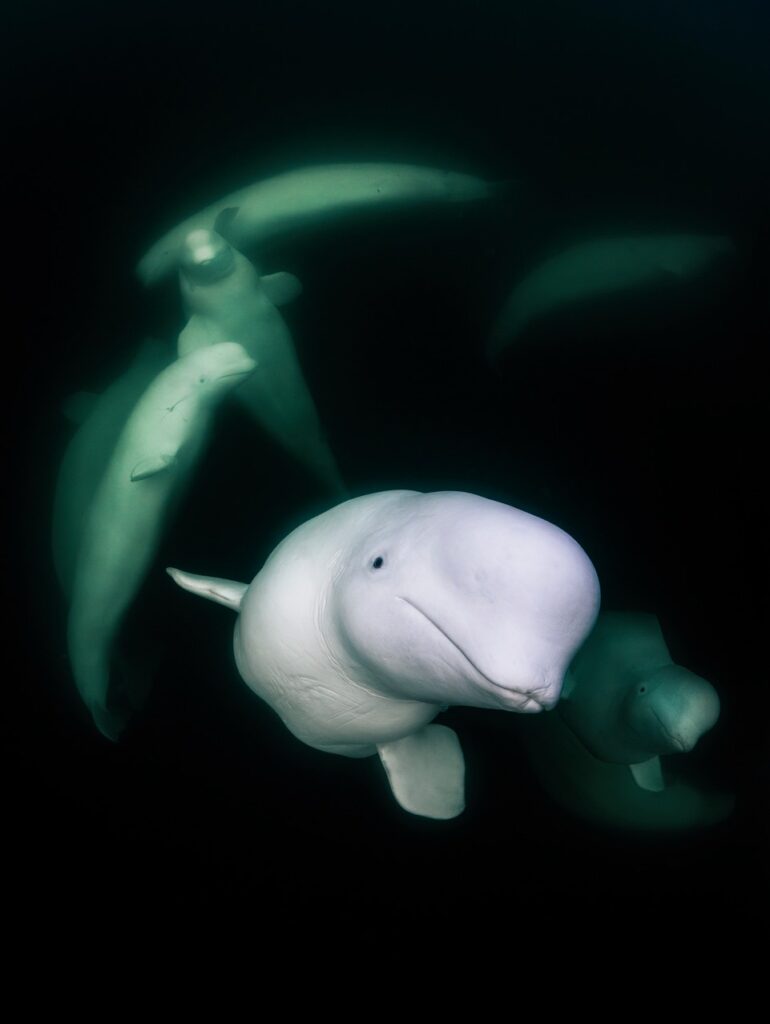
White spirits by Merche Llobera
Churchill, Canada
Floating on a board with my head and arms submerged, I experienced something truly unforgettable. The belugas came and went freely, approaching me on their own terms, meeting my gaze, vocalizing, and observing with unmistakable curiosity. Laughing with emotion, I responded with a high-pitched voice, which made them even more curious. At times, they gently touched the dome of my camera, as if investigating me in return.
I had travelled to Churchill specifically to photograph belugas, but I never anticipated such close, voluntary interactions. My intention was simply to be present, to enjoy the moment, and to create the best image possible while always allowing the animals to set the pace. Photographing from the surface, half submerged on the board, made the encounter feel genuine and unforced. There is nothing more powerful than a real connection with wild animals, one built purely on mutual curiosity. In those moments, I couldn’t help but wonder who was truly observing whom.
Black & White, third place
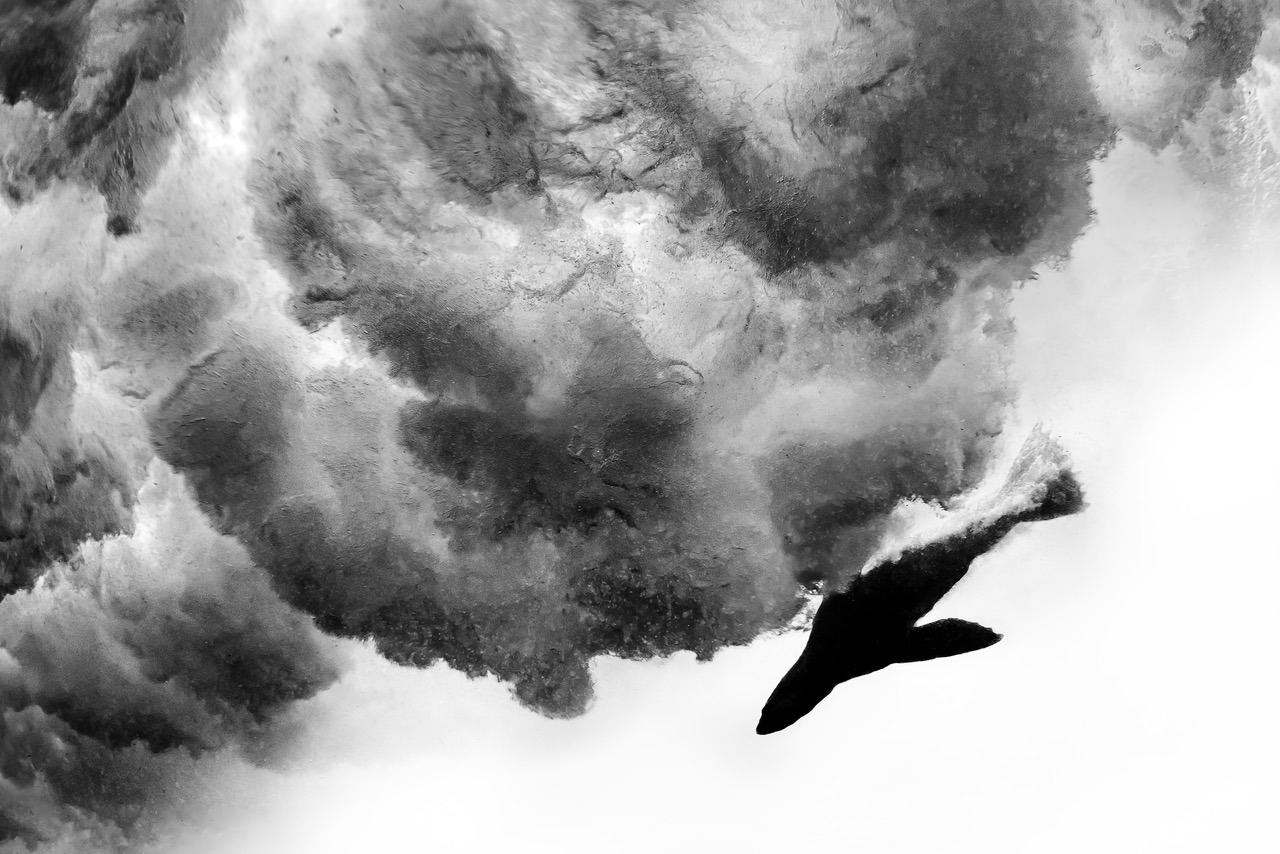
Power and Pace by David Alpert
Duiker Island, South Africa
December in Cape Town and the young fur seals are super active, playing in the waves as they crash onto the jagged rocks of Duiker Island. Joining them in the surf is exhilarating, though photography is incredibly difficult. These animals shoot through the swell like lightning bolts; there is no time for autofocus, only instinct. I have returned to this spot for over five years to capture this exact moment. Sadly, such an experience is currently unattainable as seal colonies along the Cape coast struggle with a rabies outbreak. One wonders if these encounters will ever be safe again.
Up & Coming Underwater Photographer of the Year 2026
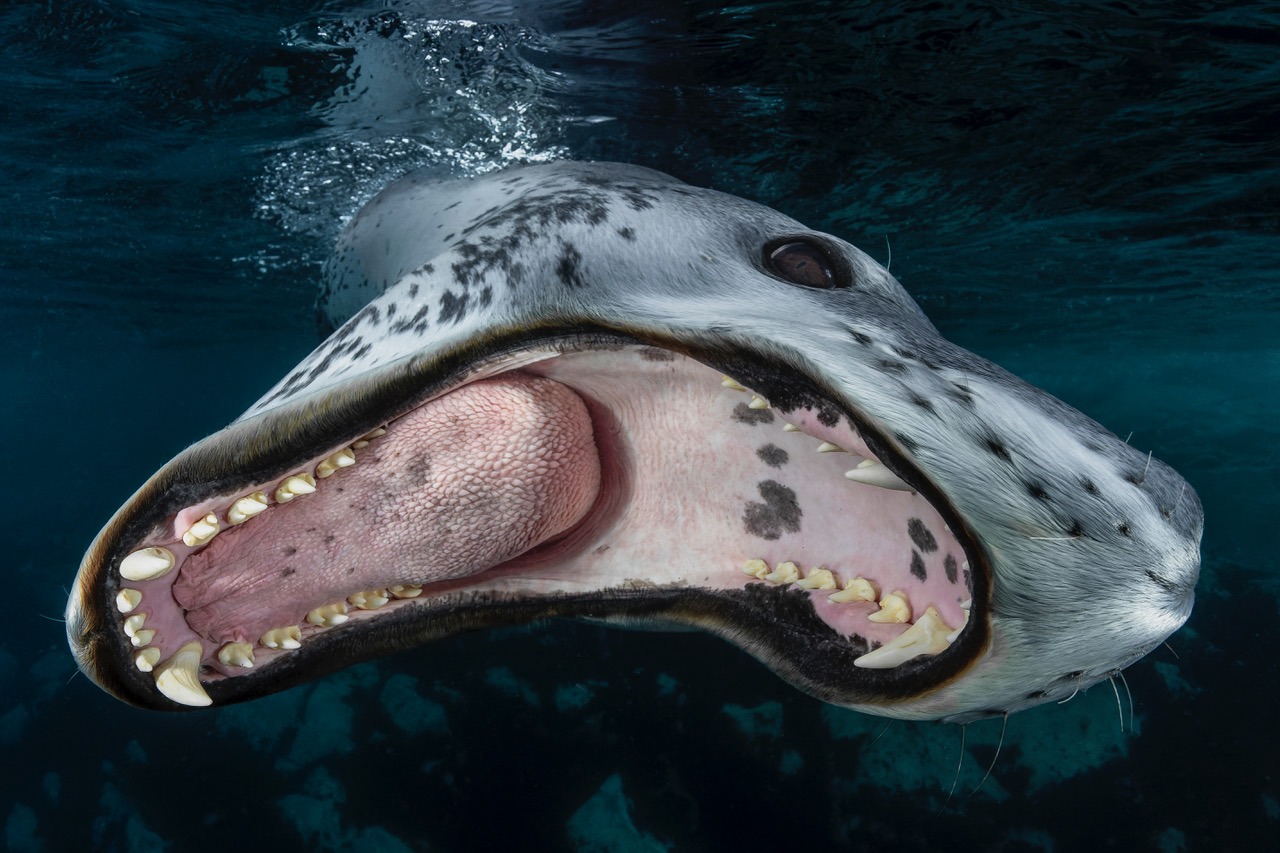
Lunging Leopard by Sam Blount
Antarctic Peninsula
For years, the leopard seal topped my Antarctic wish list, a predator I dreamed of encountering face to face. I have to say, this dive was everything I could have hoped for: clear water, good lighting and a playful seal. Leopard seals wield an astonishing array of dominance displays, and this one put them all to use, darting around me with effortless power. Watching that massive mouth lined with sharp teeth charge straight toward me is a thrill I’ll never forget.

Compact, winner
Alpine lookout by Andrea Michelutti
Lake Cornino, Italy
After years of waiting, I dived into a cold Alpine lake near my home in north-eastern Italy. Its clear, deep-blue waters rise from a spring, making it a gem among the mountains. Low nutrients favour green algae growth and the constant low temperature (around 9-11°C) contributes to the water’s clarity and unique colour. Life is sparse, but I spotted a freshwater crayfish (Austropotamobius pallipes) among the aquatic plants. Impetuous, it swam towards me until it was touching my wet lens. With the housing too low to use the LCD, I had to shoot blind, holding the camera in one hand and one strobe in the other. I turned off my second strobe, positioning the remaining light above the dome for natural top-down illumination. The composition I’d planned for years is built on the transition from green vegetation to deep blue water, with mountain peaks framed in Snell’s Window.
Runner-up, British Waters Wide Angle
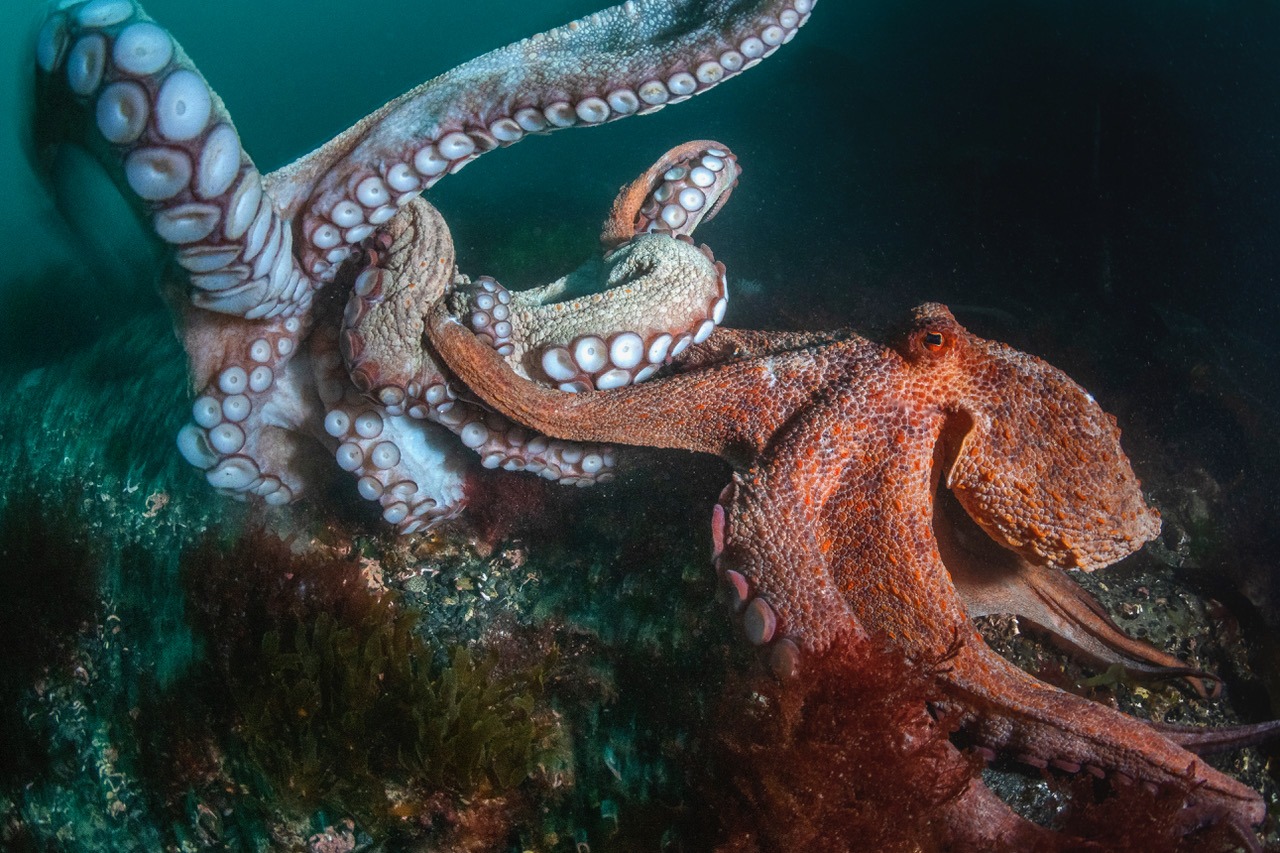
Dusk Encounter by Kirsty Andrews
Porthkerris, Cornwall
Last year was truly the year of the octopus in southern England, as these eight-armed wonders took over coastal reefs in significant numbers. Porthkerris in Cornwall was a particular hotspot. As dusk fell and darkness started to descend, I followed a large, confident individual that was patrolling and making fascinating poses as it moved. Turning a corner, it chanced upon another large octopus, and suddenly the two sprang together. My slow shutter speed emphasised the dramatic movement. My guess is that it was at least in part a mating overture, as within moments the two cephalopods had enveloped each other in a tight embrace, and I watched intrigued as they moved off together into the kelp forest.
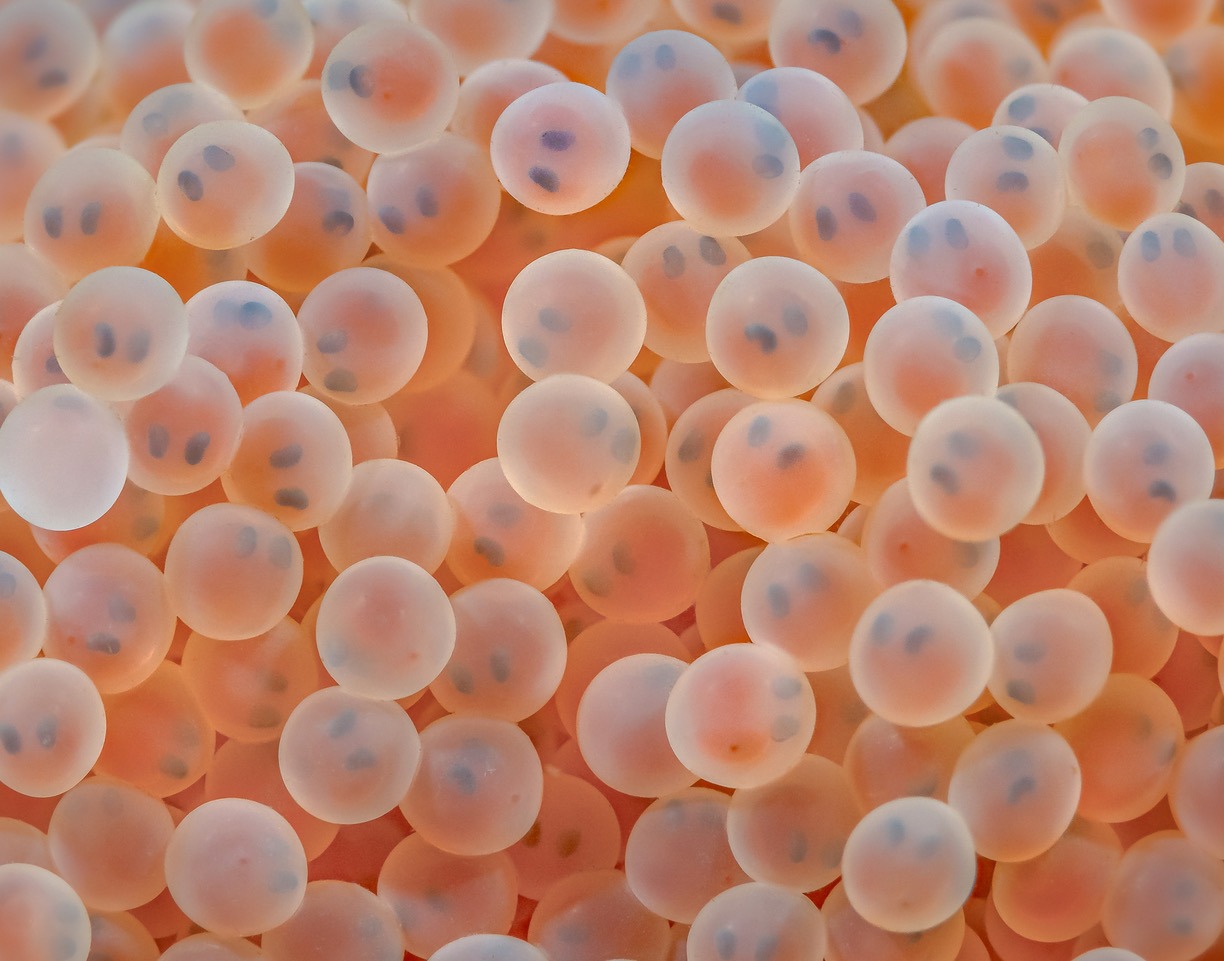
Third place, British Waters Macro
New Life by Dan Bolt
Manse Point, Loch Leven, Scotland
I had to be careful, while getting this shot, not to disturb the attendant adult scorpionfish who was protecting their newly laid eggs. I wanted to capture the tiny, still-forming eyes within each little round embryo, while at the same time having enough depth of field to show just how densely packed they were in the nest. So I decided to go for focus stacking, and this image is a stack of eight separate photos blended in camera. It took me quite a few attempts, but I finally grabbed the shot I wanted. On returning to the same spot 24 hours later I was pleased to see the adult still in attendance; my gentle approach had paid off.
See all the award winners and find out more about the competition at at underwaterphotographeroftheyear.com