
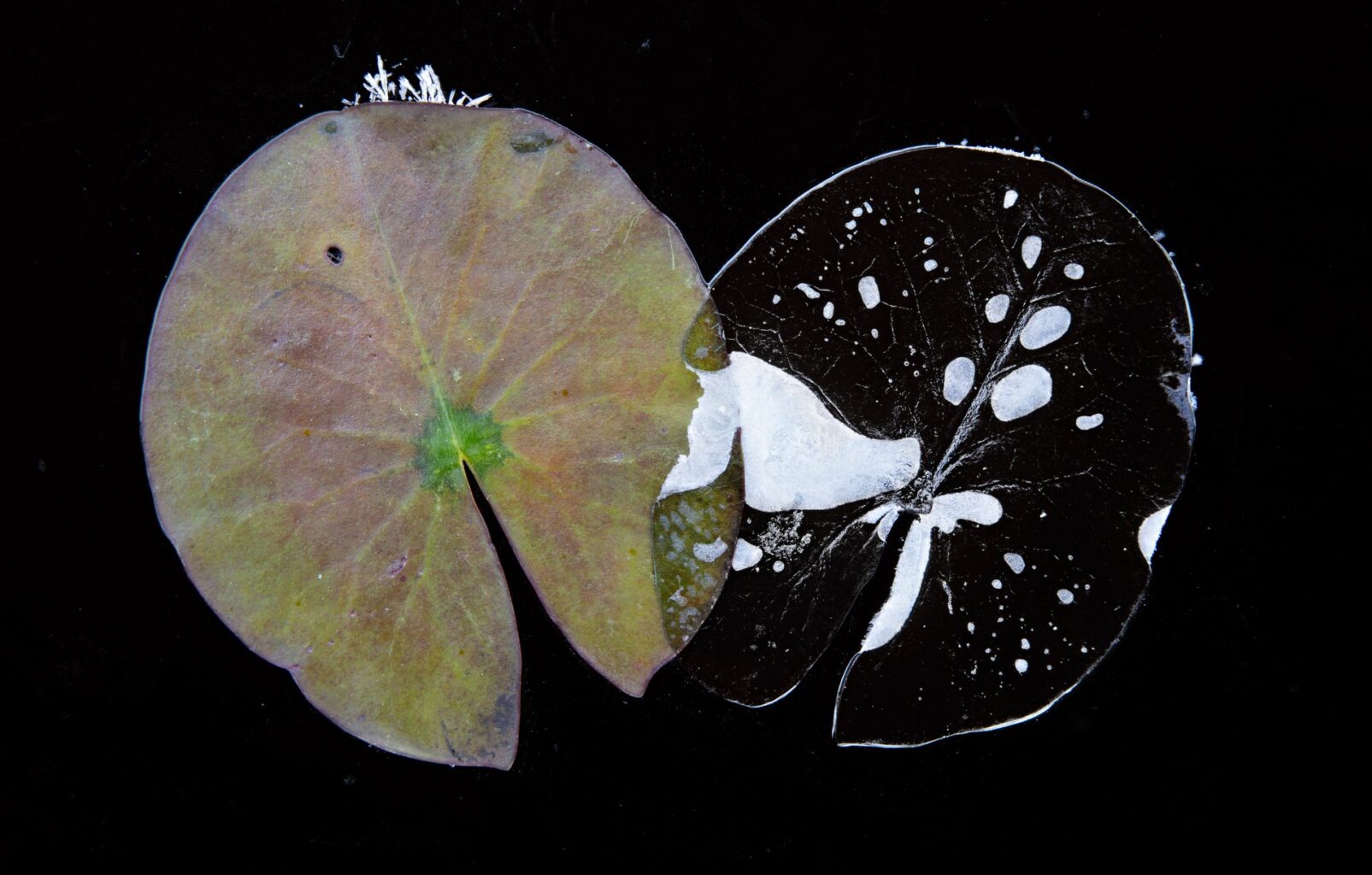
The one that left and the one that stayed
Hannu Ahonen, Finland
Plants and fungi category winner and overall winner
The winter’s ice had arrived but it remained snowless for a long time. Some of the pond’s lily pad leaves started to crumble on top of the ice. The wind took some of them with it and from those spots I discovered frosty ornaments of the leaves. I was eagerly taking photos of a natural phenomenon I had not witnessed before.
Painting from the end of the world
Lucas Mugnier-Lavorel, France
Birds, winner
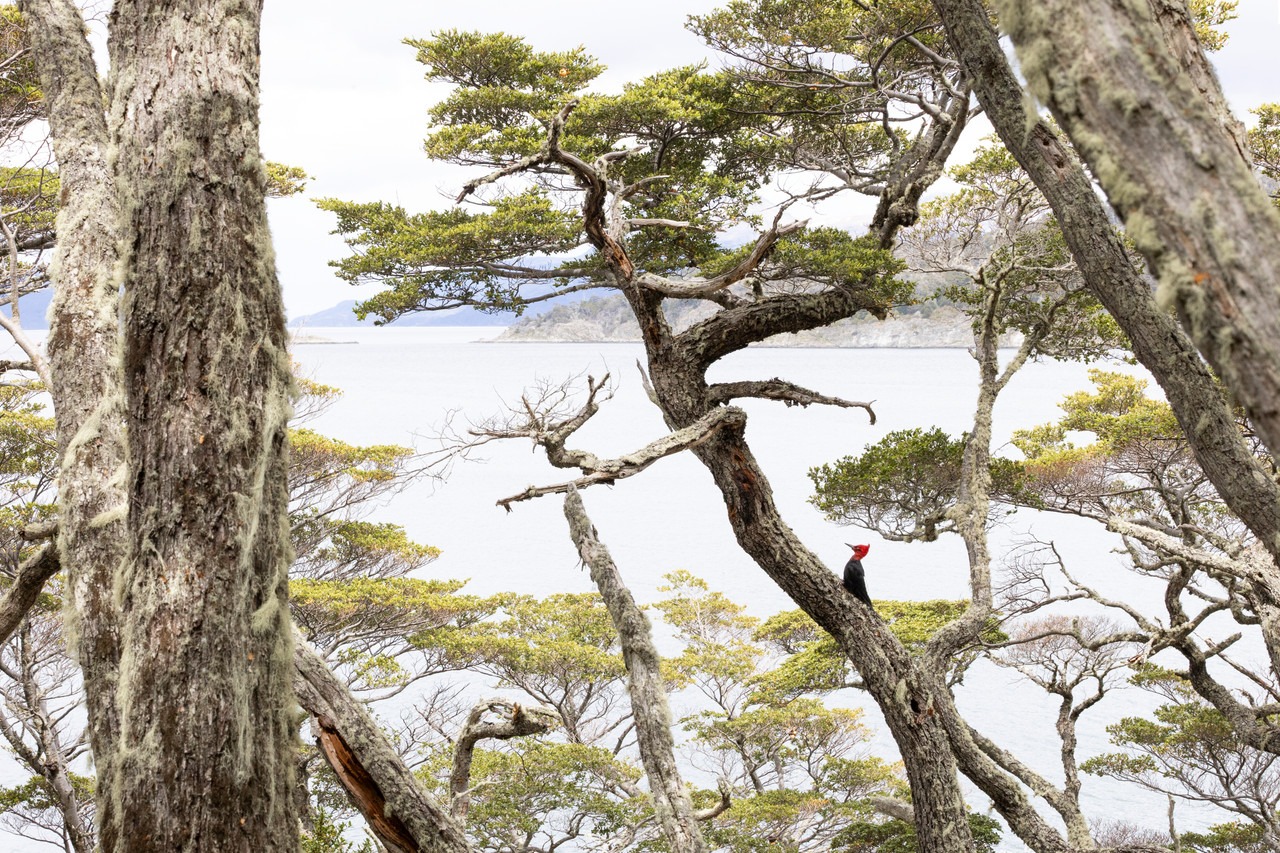
In early December 2025, in a Nothofagus forest in Tierra del Fuego National Park, Argentina, a magellanic woodpecker (Campephilus magellanicus) works its way along a weathered trunk.
These southern beech forests are the signature habitat of the far south of the continent. Twisted and stunted by relentless cold wind, these trees are far more than scenery: their decaying wood harbours the wood-boring beetle larvae that make up the bulk of the woodpecker’s diet. The species depends on mature stands with abundant dead wood, a habitat now in decline across much of its range.
I deliberately chose a relatively short focal length. Rather than isolating the bird, I wanted to place it inside the world that sustains it: the tangle of branches, with Lapataia Bay and the Beagle Channel opening out behind. To fit the whole tree into the frame, the image is a panorama assembled from two shots made less than a second apart.
Unlike the woodpeckers I know in France, which vanish at the first footstep, this one seemed almost indifferent to human presence. It fed nearby for close to an hour, entirely untroubled by passing hikers. I photographed it from the trail without stepping off it, so as not to disturb the bird.
Boatstrike
Andy Parkinson, UK
Birds, runner-up
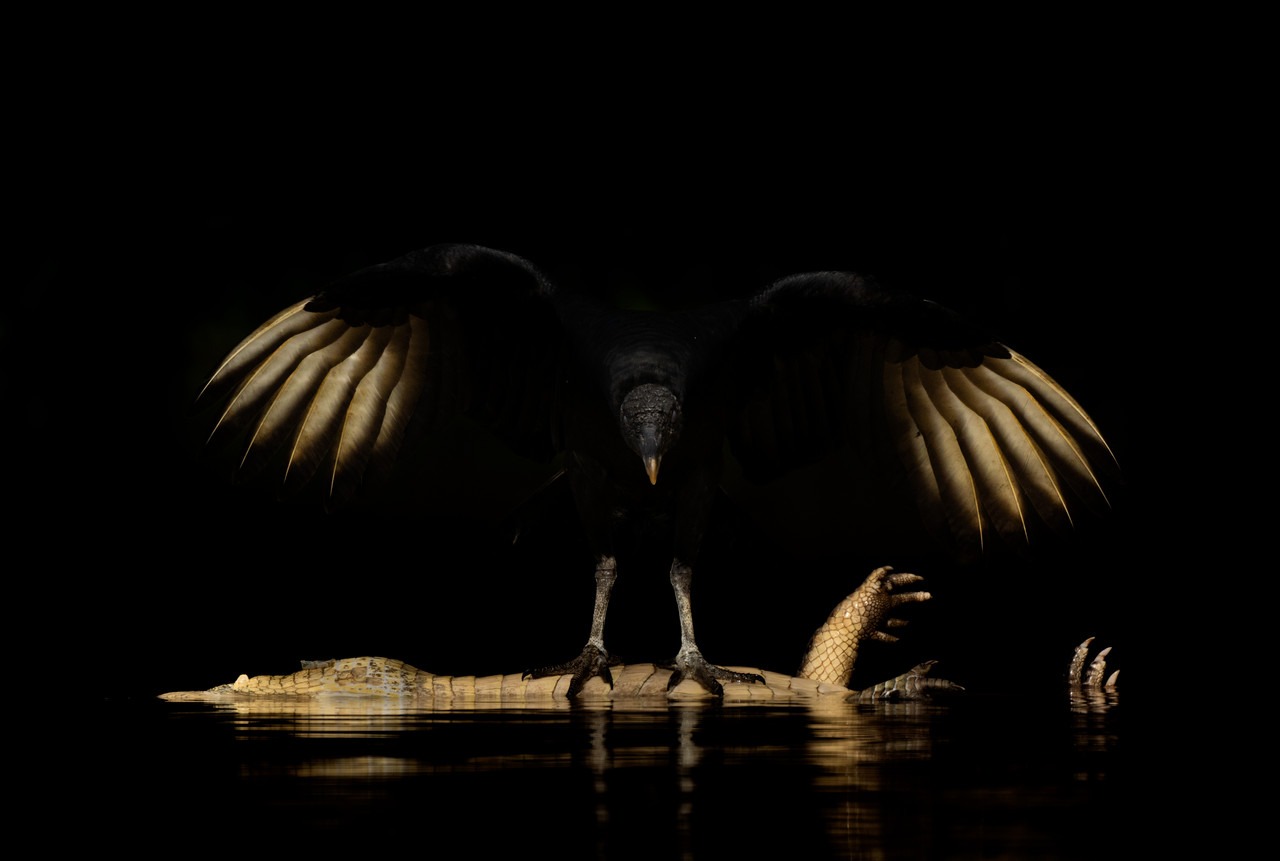
When we arrived at the scene, a number of boats had gathered around a dead caiman floating in the water. Close by, a jaguar was concealed in the water hyacinth, waiting patiently to retrieve the caiman, but one of the tourist boats was too close. After a few minutes the jaguar gave up and headed off upstream, followed by all of the boats.
I decided to wait with the dead caiman, certain that the jaguar would return and claim its easy meal. It was whilst I was waiting that the black vulture arrived and landed on the caiman, using its wings to balance as other boats passed by, creating a wake that made it difficult for the vulture to balance.
After some time the vulture gave up trying to open the carcass and eventually the jaguar returned to claim its easy meal.
Parallel universes
Csaba Daroczi, Hungary
Birds, highly commended
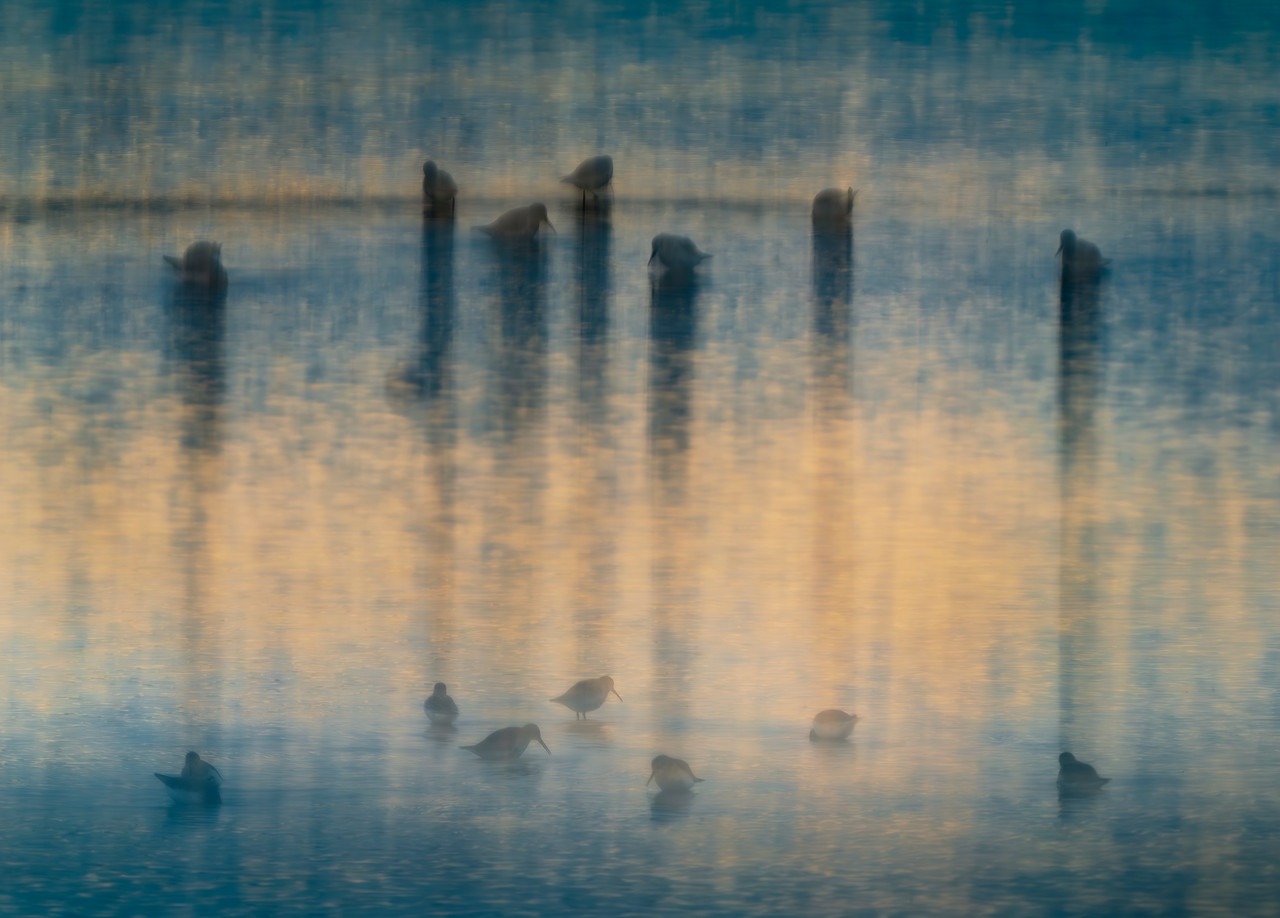
On this September day, I went to Lake Balaton because at this time you can observe a lot of migrating birds on the large sandbar at Balatonfenyves, and because the birds there are used to people, allowing me to photograph them without a hide. I had been here two years earlier, but now I came back wanting to take a picture that was different from usual.
I set a long shutter speed on my camera and tried that. When the birds were flying, I followed them, and when they were feeding, I moved the camera. It took a lot of luck to get pictures like this with a sharp point while also conveying the movement.
Hiding in the green
Raphael De Moliner, Switzerland
Birds, highly commended
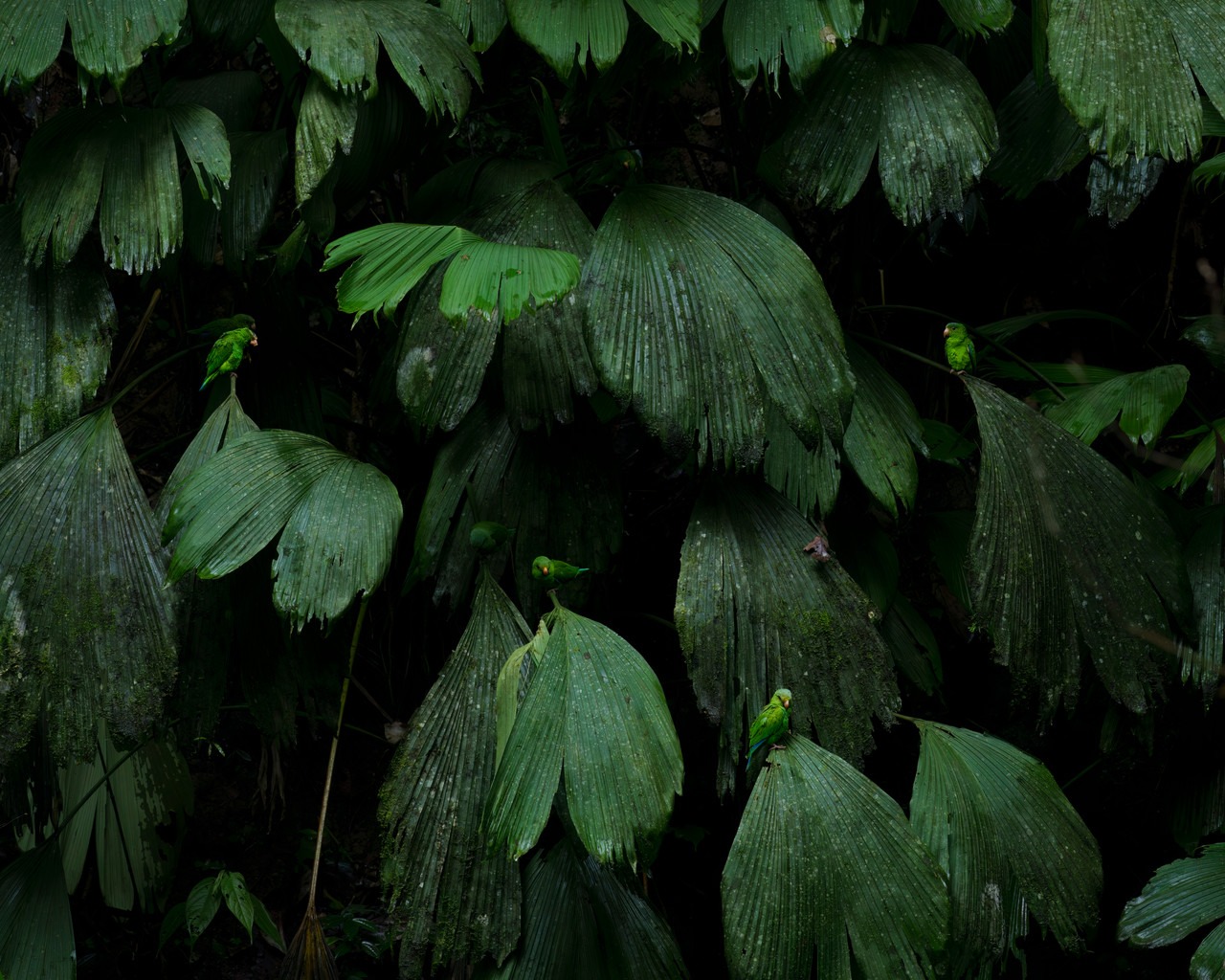
While having the privilege of travelling to the Napo River in Ecuador, part of the Amazon region, we visited a clay lick to see the beautiful scarlet macaws. But what impressed me even more was the appearance and sound of the cobalt-winged parakeets.
Very skittish, they stayed for several hours in the greenery. Their calls seemed to cover everything, yet they were hardly visible. Even when they came out of their hiding places, they seemed to blend in perfectly with the green leaves.
The image shows this perfect camouflage. They were sitting all over the place, communicating with their own kind, until they finally dared to come down to drink water and replenish their bodies with essential minerals. Spotting a handful of them was difficult, even though you could hear hundreds of them.

Play misty
Paul Goldstein, UK
Mammals, winner
For years I have tried for that misty image when a combination of the previous night’s rain, Rift Valley altitude and cold result in fog clinging to the plains for a few precious minutes. The problem is that once in the mist, it is virtually impossible to find anything.
I have worked with William Wanyika on the northern plains of Laikipia for many years. He likes a rudely early start just as much as I do and we only have to drive eight minutes from camp to be in front of Mt Kenya in the false dawn. This pre-sunrise blush was obscured by this ephemeral phenomenon and, as usual, it was impossible to find anything, until a zephyr of wind cleared the grey curtain for a second and we saw a giraffe.
Driving away from it a little and compressing the scene with a 600mm lens gave the desired effect and, thankfully, it stayed still in the cold. Five minutes later the giraffe was gone, as was the mist. The pastel colours are typical of this area.
Aspen shadows
Devon Pradhuman, USA
Mammals, highly commended
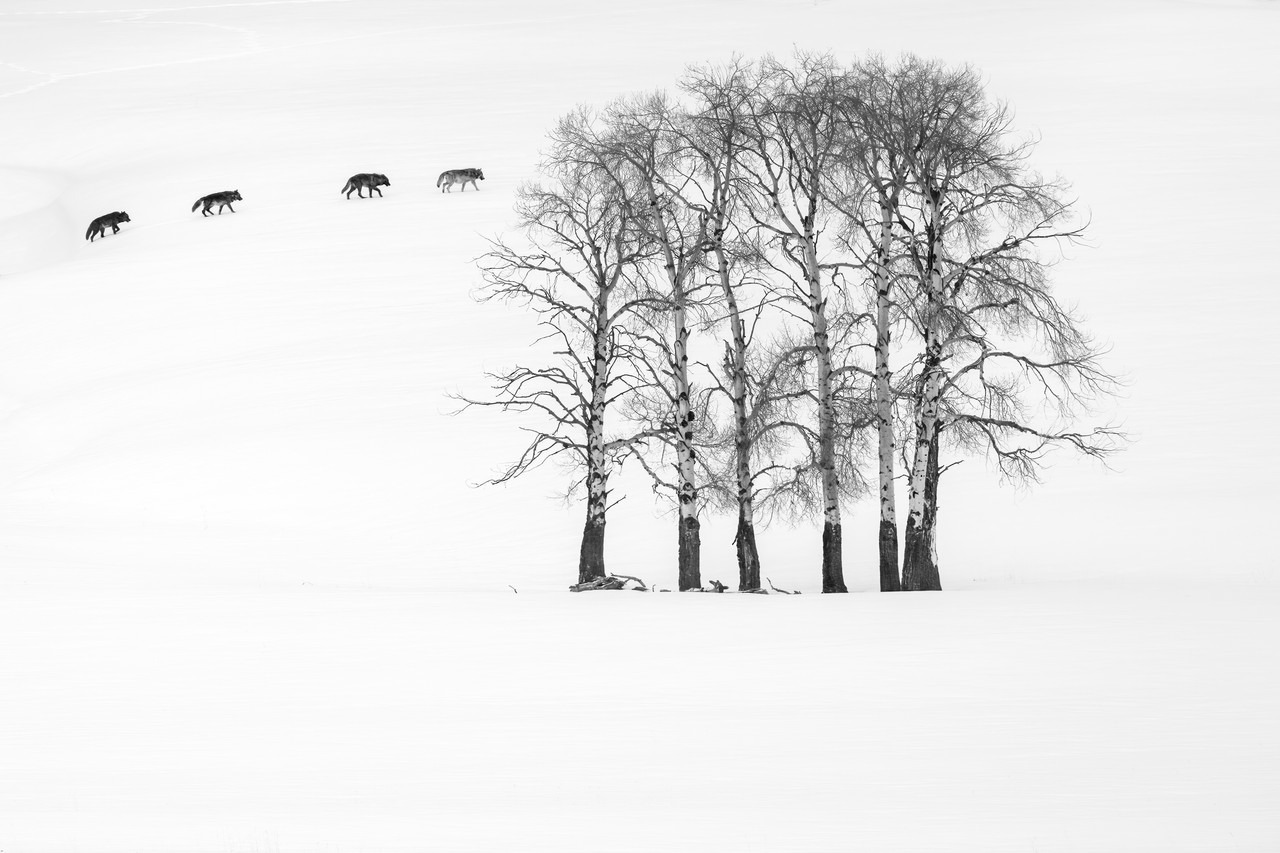
Four grey wolves move through a stand of aspens in Yellowstone’s Lamar Valley, their shadows stretching long across fresh snow. I had been watching this pack from a distance, searching for a composition that could hold its own against the scale of the landscape. The wolves were little more than dark punctuation marks against the white.
Out of the shadows
Sergey Bystritsky, Argentina
Mammals, highly commended
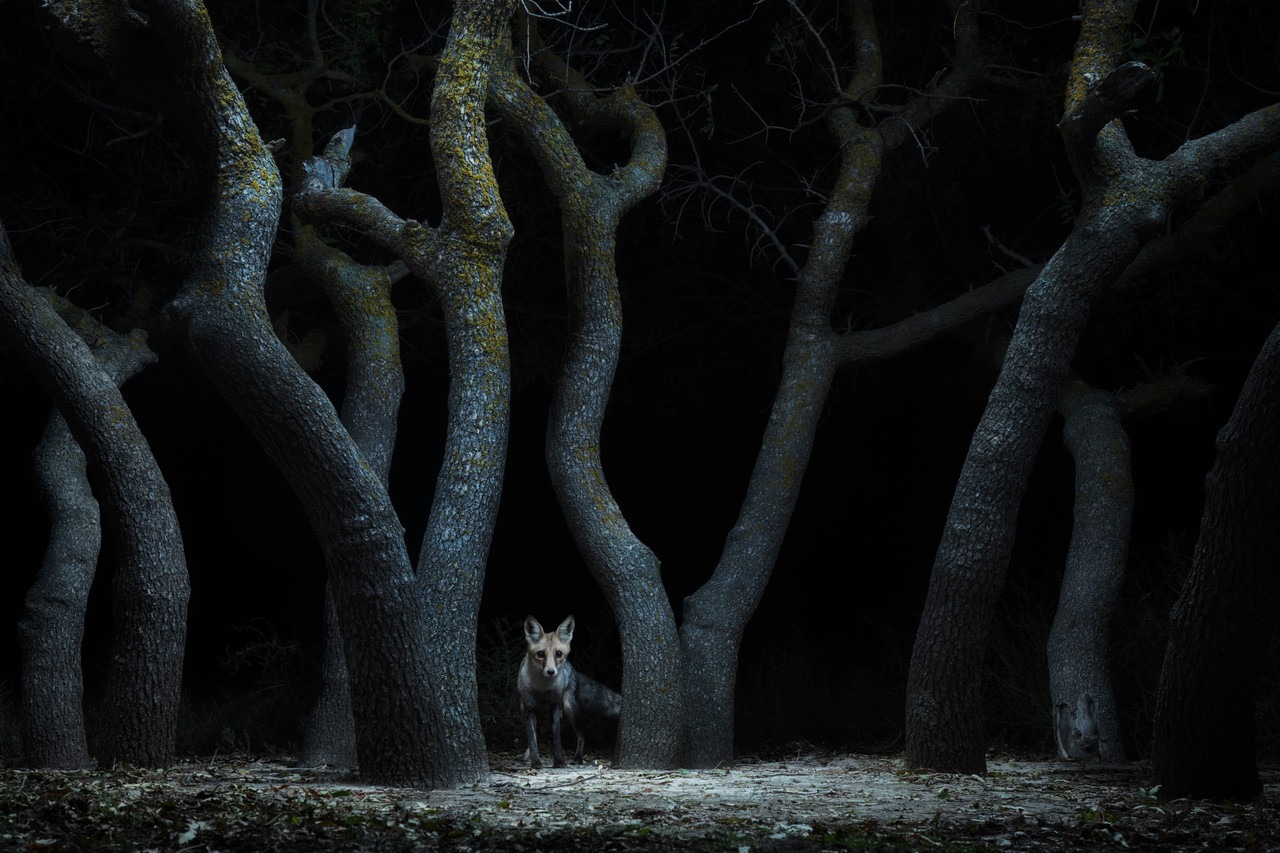
This photograph of the fox was taken in the semi-desert of Samukhi, in Georgia’s Vashlovani National Park. Apart from grass, almost nothing grows there, and only occasionally near the hilly outskirts are trees found, which made it all the more surprising to find a spot with such a dense cluster.
At night, many hares and foxes roam these areas, and the terrain suggested the presence of an animal trail near this tree, so I could expect visitors and prepared the shooting setup. In addition to a camera with a motion sensor, I mounted four flashes and two large pieces of fabric in the tree canopy, serving as softboxes to provide soft light.
The pitcher’s micro-kingdom
Marcus Kuan, Singapore
Other animals, winner
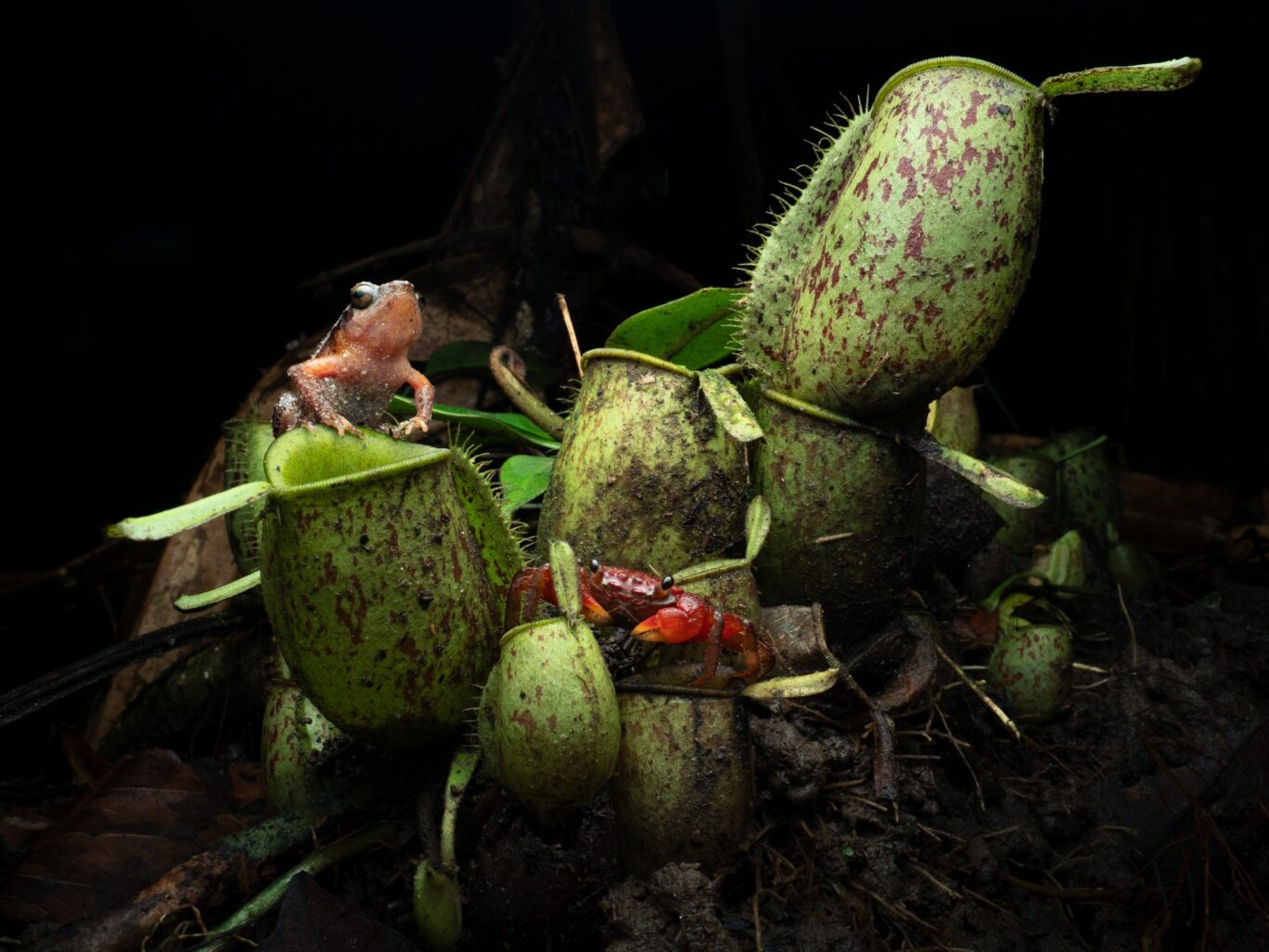
While trekking through a swamp forest in water roughly a foot deep, I returned to a small cluster of pitcher plants I have been monitoring for the past two years. On this occasion, I photographed a land crab (Phricotelphusa sp.) and a Lim Boo Liat’s sticky frog (Kalophrynus limbooliati) perched atop the same cluster.
This species of frog has previously been observed using the pools within pitcher plants as sites for its tadpoles to develop. The crab has no documented equivalent relationship with these plants, but appeared to be foraging for organic material around them. Together, the two animals offer a fascinating glimpse of how different species use the same small corner of a swamp forest.
Interwoven
Antonio Nuñez Lemos, Switzerland
Plants and fungi, highly commended
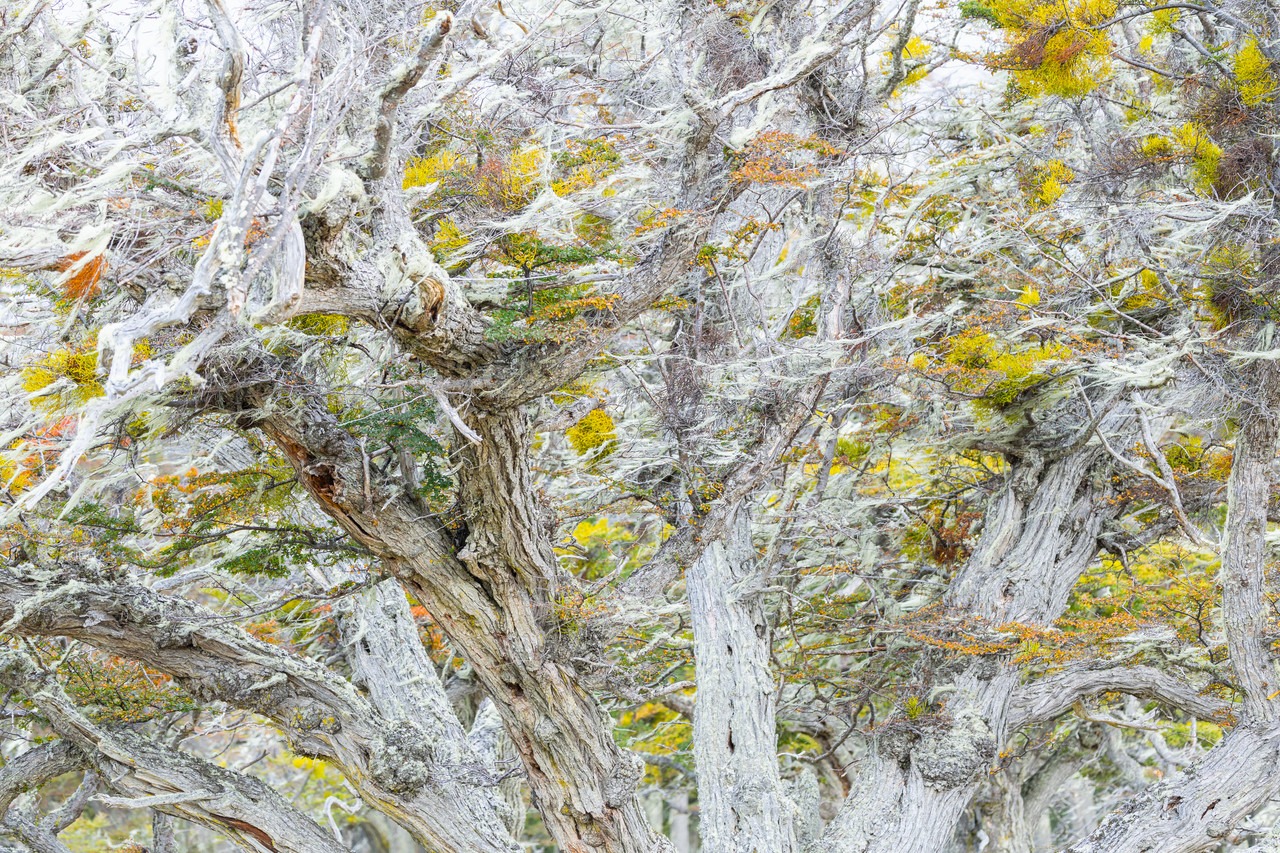
The photograph was taken near Lago Blanco, in southern Tierra del Fuego, Chile. Over the past few years, I have returned to this region, drawn by the austral autumn and the transformation it brings to its forests. I already knew this particular location well, having visited it on previous occasions to photograph Magellanic woodpeckers, which find an especially favourable habitat in these old-growth forests of lenga (Nothofagus pumilio).
In March 2026, I returned with the intention of continuing to explore the austral autumn through photography. This time, however, my attention shifted away from the wildlife and towards the forest itself. In a particularly dense area, twisted trunks and interlacing branches mingled with lichens and other epiphytic organisms, creating a complex layering of lines, textures and subtle accents of colour.
Rather than seeking a wider view of the autumn landscape, I decided to isolate a small section of the forest. I looked for a tight composition, without a horizon or obvious spatial references, that would preserve the complexity of the scene and allow the eye to move through its different layers. I also chose to slightly overexpose the image, reducing the visual weight of the shadows and emphasising the trunks and lichens, their pale tones interwoven with the greens, yellows and oranges of the forest.
In the circle of vultures around the falls
J Fritz Rumpf, USA
Birds, winner
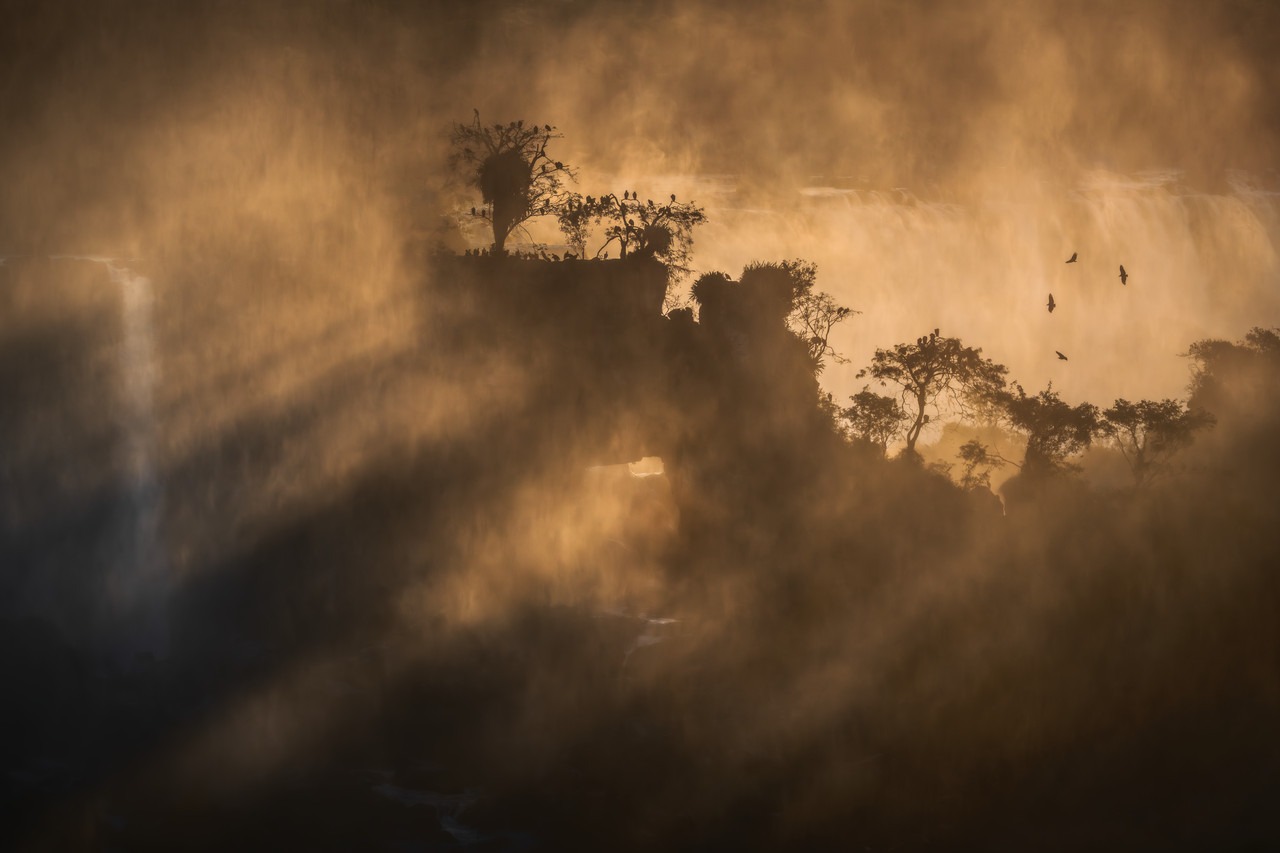
A longtime dream of visiting the famous Iguazú Falls finally became a reality in 2025. Consisting of approximately 275 waterfalls, which span a width of roughly 2,700 metres (8,858ft), and an average height of around 80 metres (262ft), Iguazú Falls straddles the border between Brazil and Argentina. Iguazú National Park and the neighbouring property constitute a significant remnant of the Atlantic Forest. This forest biome covers large parts of the Brazilian coast, extending into Northern Argentina and Uruguay, as well as Eastern Paraguay. It is known for its extreme habitat and species diversity.
As I marvelled at the beauty and enormity of this natural wonder, I tried to come up with a different way of photographing this magical place. To capture the enormity of these falls in one image was out of the question, so I set out to find a more intimate composition that still conveyed the beauty and power of this amazing place.
Catherine wheel
Gergo Rugli, Australia
Landscapes, highly commended
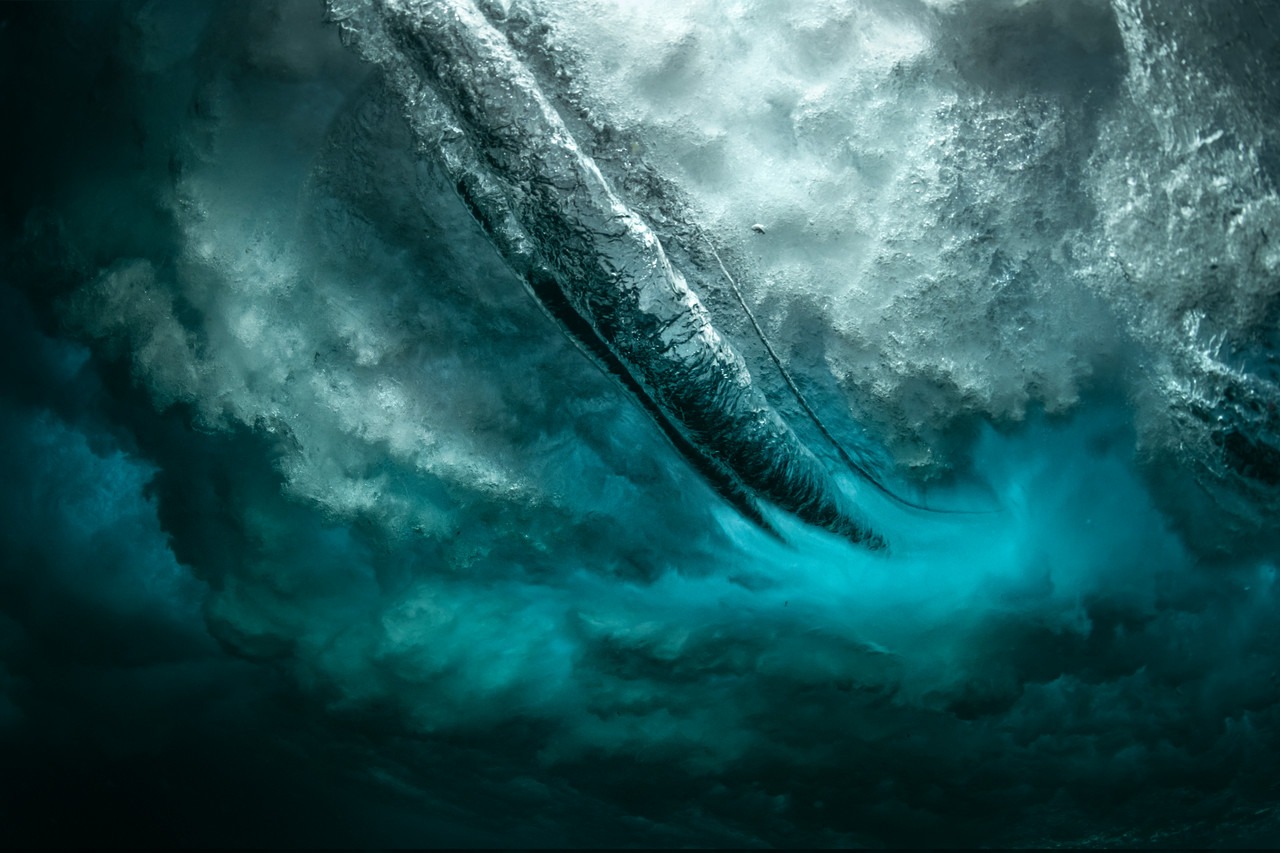
I captured this image at Bronte Beach in Sydney, Australia. That afternoon, I swam out with my underwater housing and flash to photograph waves breaking over the reef. While I was in the water, an unexpected rogue wave suddenly appeared. I duck-dived beneath it and pointed my camera towards the wave just as it crashed down on me. The force of the wave pushed me hard against the reef, while creating the circular, wheel-like patterns visible in the photograph. The shape and power of the wave reminded me of a Catherine wheel, which became the title of the image.
The cave of illusion
Juan Garcia Lucas, Spain
Landscapes, highly commended
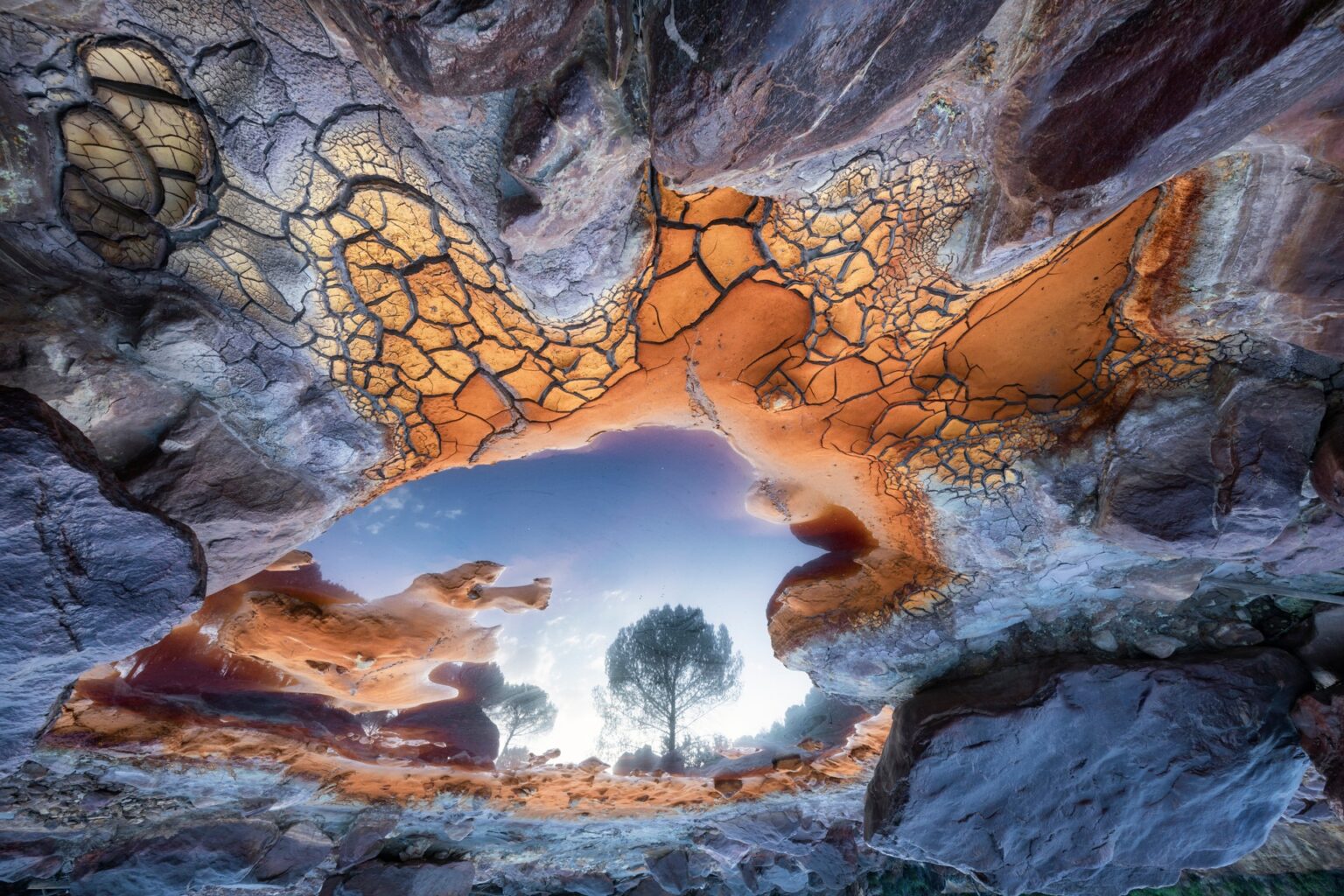
A trompe-l’œil is an intentional visual illusion that tricks the eye and makes the brain question what it is seeing. From the very beginning, my intention with this photograph was that, once the image is rotated 180 degrees, the viewer would briefly believe they are standing inside a beautiful and unusual cave, looking out at a tree located beyond the cave’s entrance. And the colours? They come from the magical Río Tinto, in Huelva, Spain.
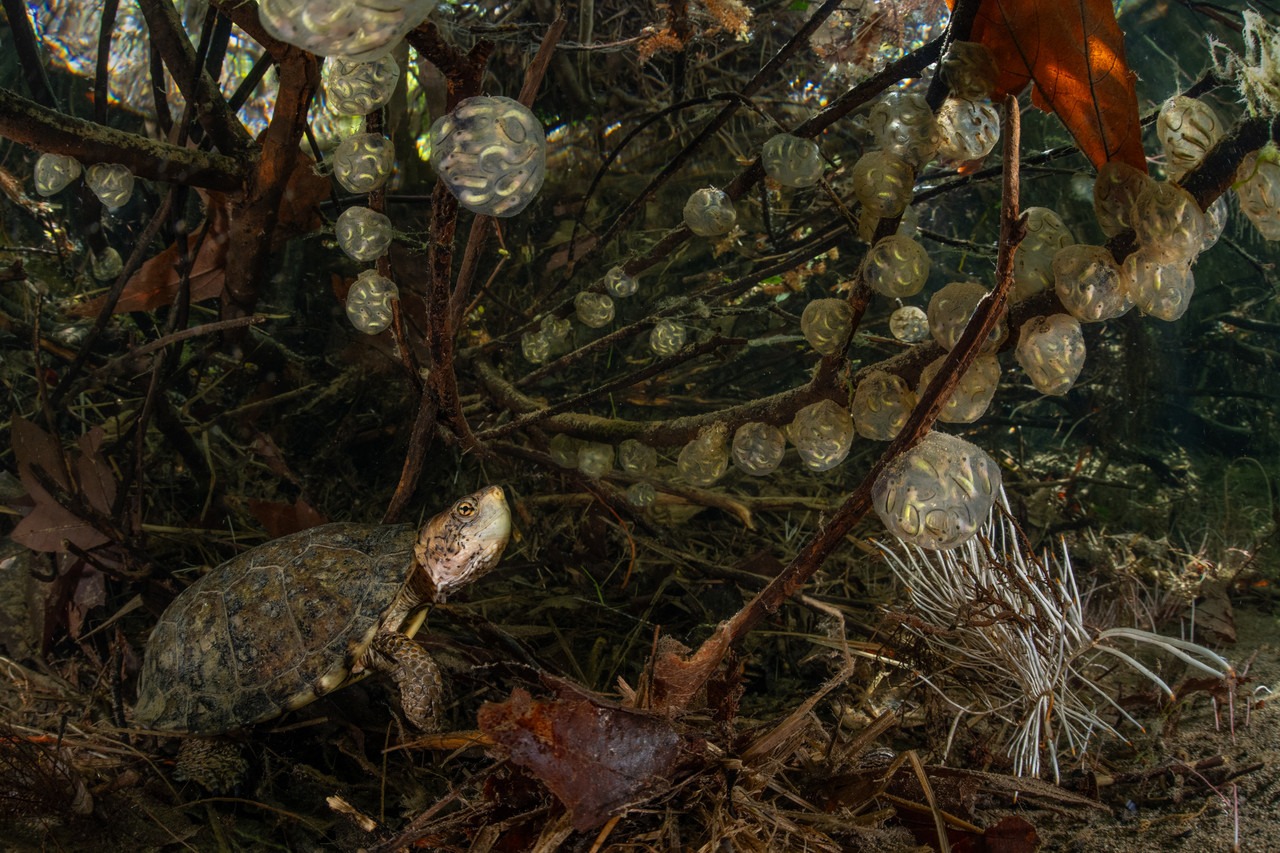
Beneath aquatic constellations
Matt Pérez, USA
Underwater, winner
The southwestern pond turtle (Actinemys pallida) is one of two turtle species native to California. I make several trips annually from my home in San Jose to snorkel and observe them. On this occasion, I noticed two turtles in the early stages of courtship. I drifted downstream and became nearly perpendicular with the male; he remained calm and motionless. So, I anchored myself and approached him very slowly.
The closer I got, the more aware I became of the surroundings; the branches around him were adorned with California newt (Taricha torosa) egg masses containing well-developed larvae. I positioned the camera housing low and angled it slightly upward so I could capture the male beneath the eggs with the branches extending out towards the dome. At that point, I left him to continue his, hopefully successful, courtship.
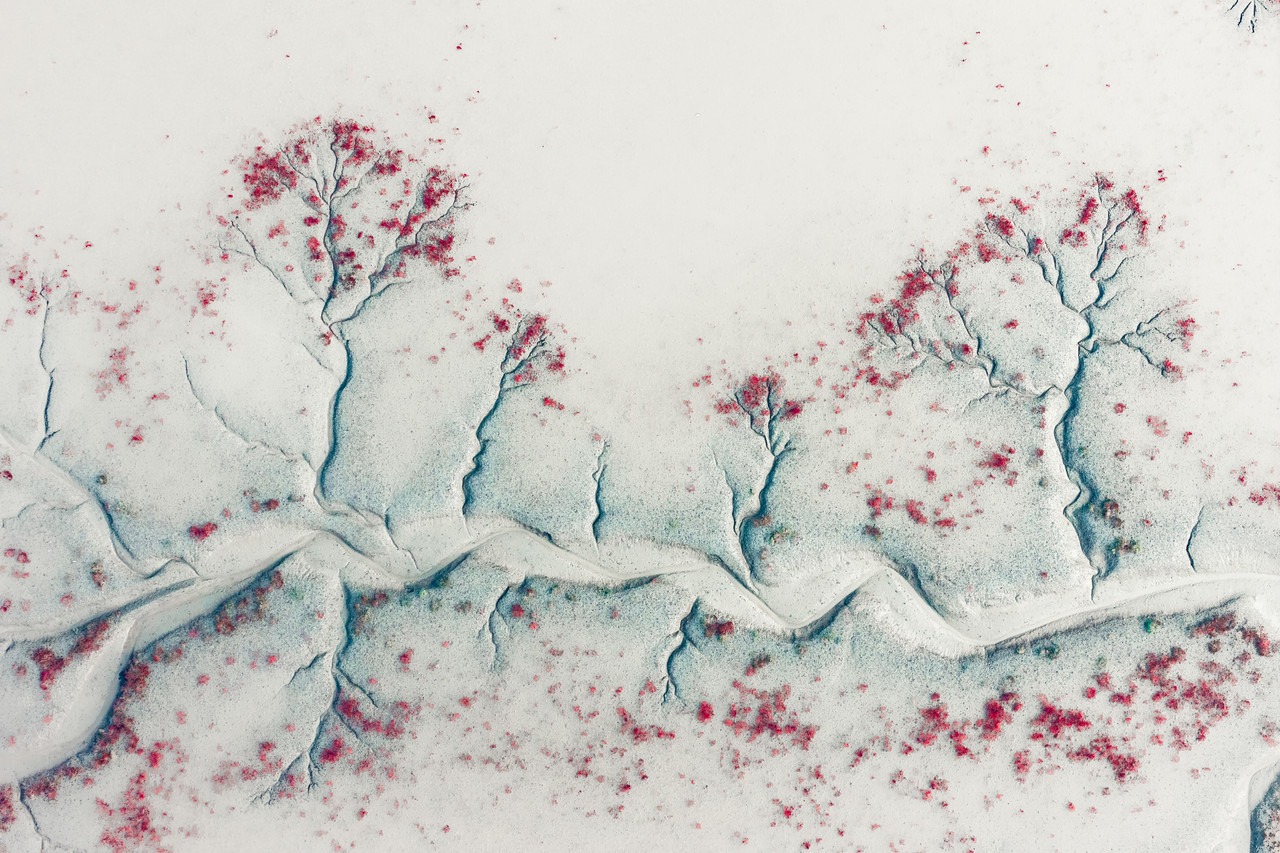
Peach blossoms in the snow
Xuzhong Liu, China
Natural art, winner
This photo was taken in September 2025 at the Red Beach in a wetland reserve, in Panjin, Liaoning Province, China. Using a drone, I found this scene on the screen of my remote controller and was reminded of a trip to Nyingchi, Tibet, in March, where I photographed peach blossoms. I immediately pressed the shutter and captured the moment.
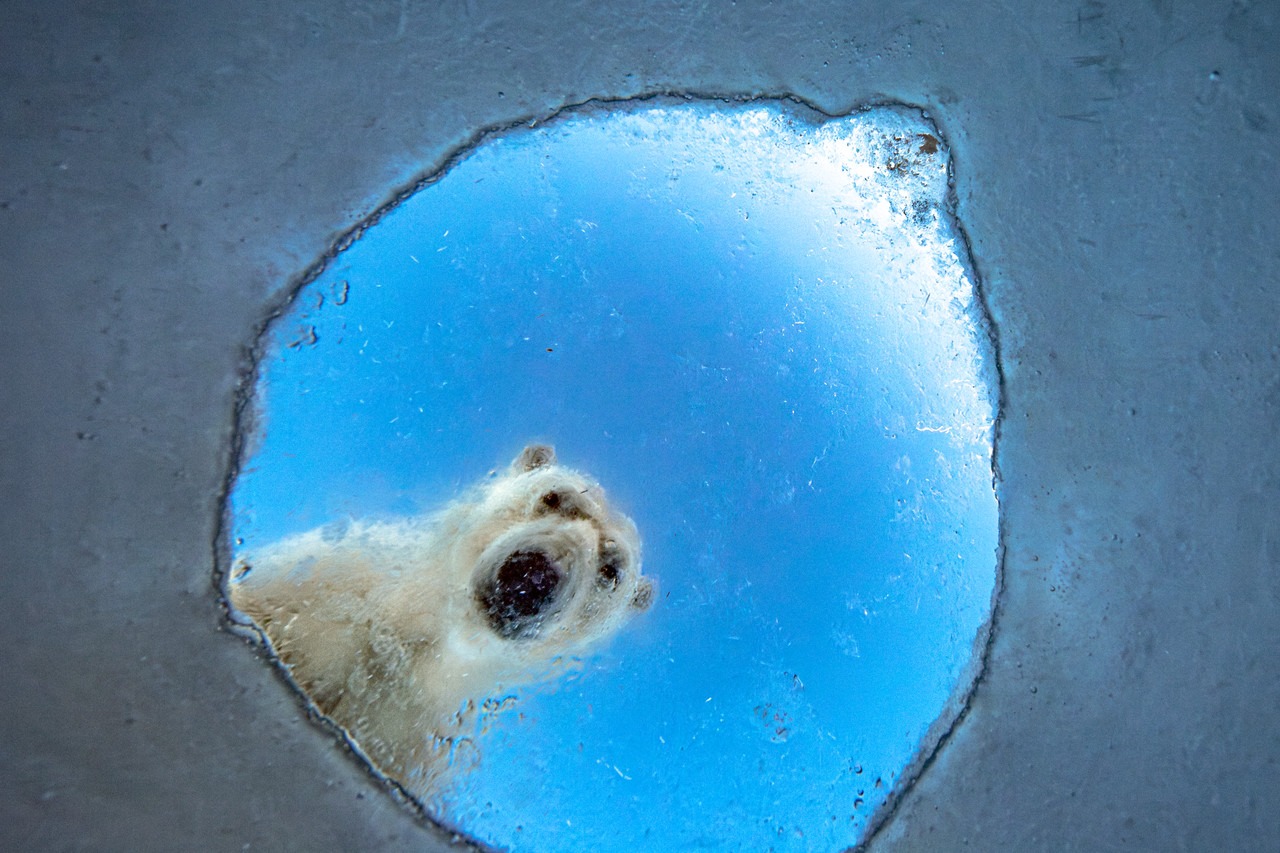
A seal’s worst nightmare
Audun Rikardsen, Norway
Animal portraits, winner
A polar bear looks into a seal breathing hole seen from a seal’s perspective, in the drift ice north of Svalbard at almost 83 degrees north. For many years I have dreamed of taking a picture like this, of the most common hunting tactic of polar bears – but seen from the seal’s perspective when it suddenly realises there is a polar bear waiting to kill it. It took me over three years to plan and try to take this picture, with several unsuccessful tries over the years.
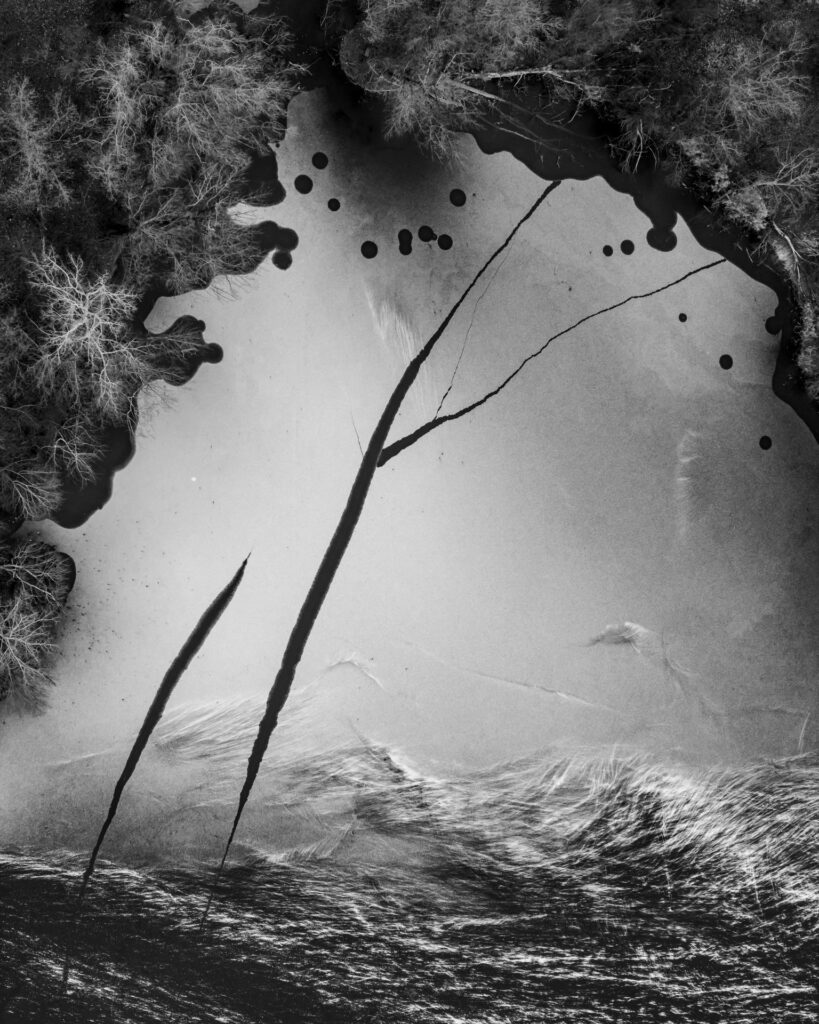
Storm on the sea
László Tóth, Hungary
Black and white, winner
I’ve always been interested in flying. All kinds of it. In winter, when the lakes around my place of residence freeze, I set off on a journey and fly over them all. The surface of each lake surprises and amazes me every time. Nature delights me with fantastic graphics. There was 0.5 cm of snow on the ice of this lake that morning, and a stormy wind was blowing. I thought I would test my drone in high winds. It was the right thing to do!
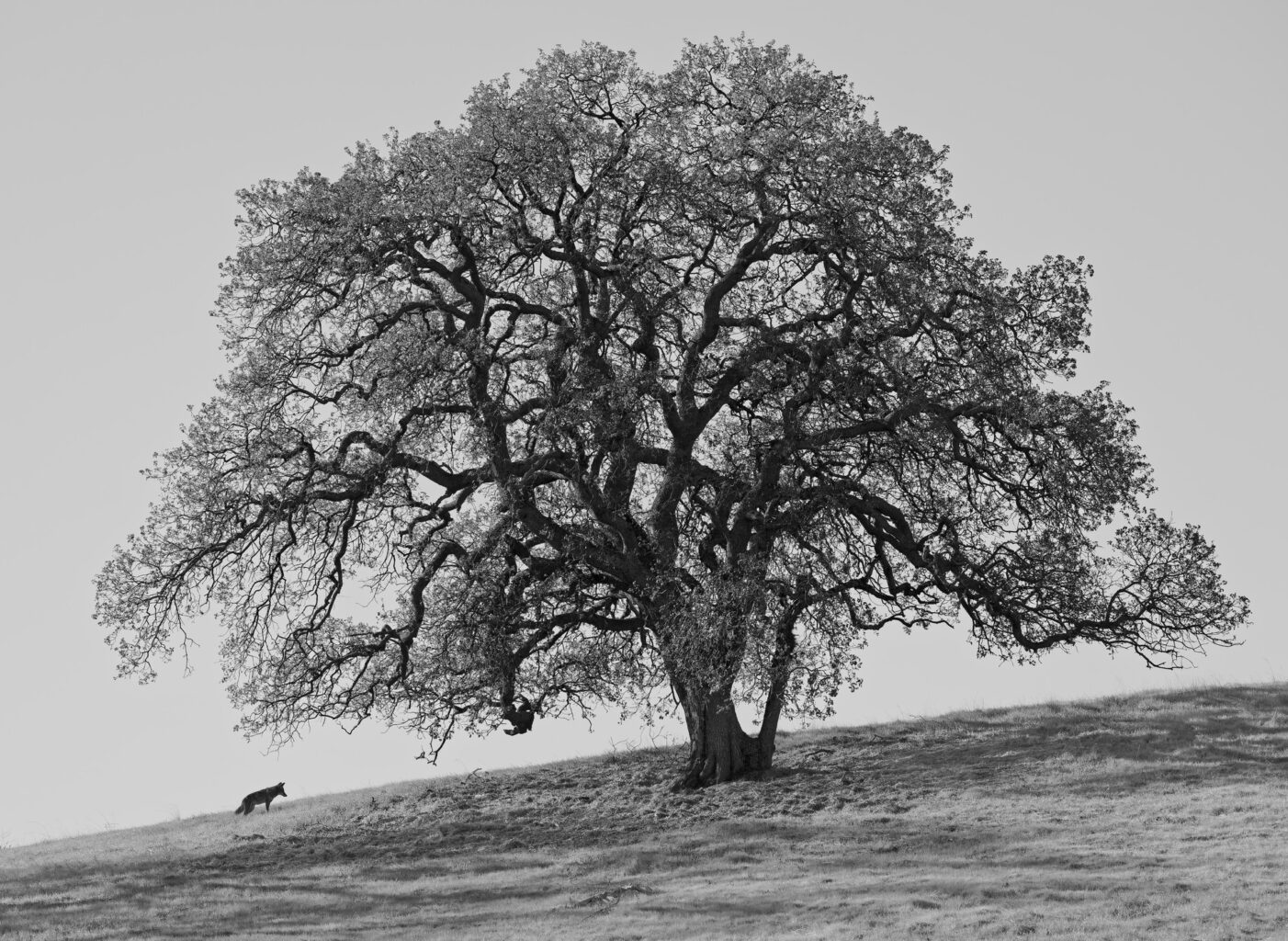
Tree of life
Parham Pourahmad, USA
Youth, winner
I’ve been following the group of coyotes that live in the hills by Stanford University for a few years now, and a goal of mine has always been to frame a coyote in the habitat that they call home: the oak savannah. On this particular day, I found a few coyotes hunting for rodents on the grassy hills. I followed this one as it trotted from place to place while scanning the ground for gophers. However, when it went into a creek, I lost track of it and thought it was gone for good. I waited for fifteen minutes, hoping for it to come back out.
Suddenly, I looked up at a nearby oak tree to find that the coyote had come out and was hunting for rodents beneath the tree! I ran to get to a better position, and took a few pictures. I was lucky enough to get this picture, where its head is down, looking for prey, while the huge oak tree above it shines.
The 2027 Nature Photographer of the Year competition is now open for entries, with a prize pool worth €25,000. Find out how to submit at naturephotographeroftheyear.com.