
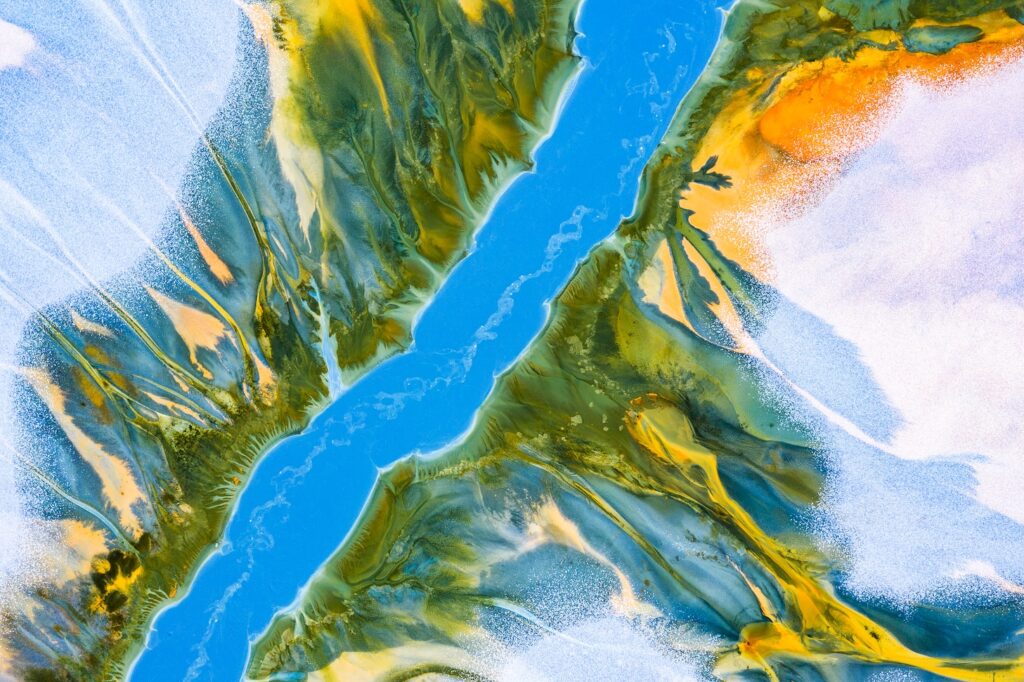
Cuejdel Lake isn’t a location that’s familiar to a lot of photographers around the world. The recently formed (in geological terms) lake, in north-eastern Romania, isn’t even particularly famous among Romanians. But for more than a decade, Romanian photographer Gheorghe Popa has been making repeat visits to Cuejdel, the largest natural dam lake in the country, working with cameras and drones to produce original landscape images, often abstracts. As he states on his website, he likes to ‘meticulously engage in his long-term projects, with environments and landscapes [that are] often left unnoticed at first glance’.
Born in 1982 in Aiud, a small city in Transylvania, Popa moved to Târgu Neamț in the Romanian region of Moldavia in 2007, setting out to explore the nearby landscapes that sit within the wildlife-rich Carpathian Mountains. Popa’s latest book, Cuejdel: A Tale from the Carpathian Wilderness, collects his best work from the lake, which is less than an hour’s drive from where he lives. He’s also hard at work on a book about Vânători-Neamț Nature Park, which is also close to his home, though his own photographic work depends on how much time he can take off from his day job, as he and his wife run a pharmacy in the town of Târgu Neamț.
Your recent book is focused on Cuejdel Lake. What made you want to dedicate a book to that location?
Lake Cuejdel is just 50 minutes away from me. We have three historical regions in Romania. One is Transylvania, where I was born, which is very famous. Then there’s Moldavia and Wallachia. I live in Târgu Neamț, a town in Moldavia. I’m just 100km away from Ukraine.
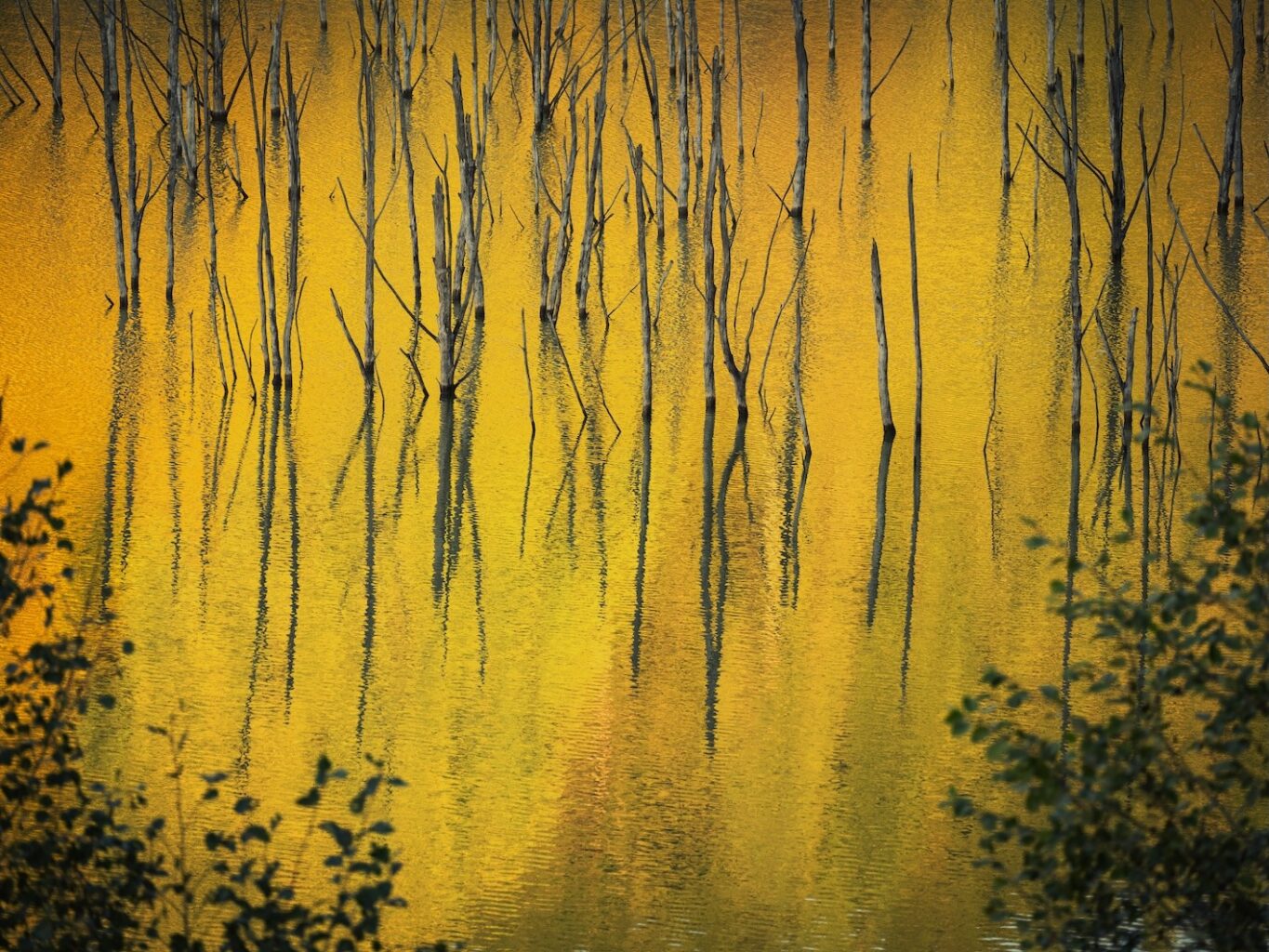
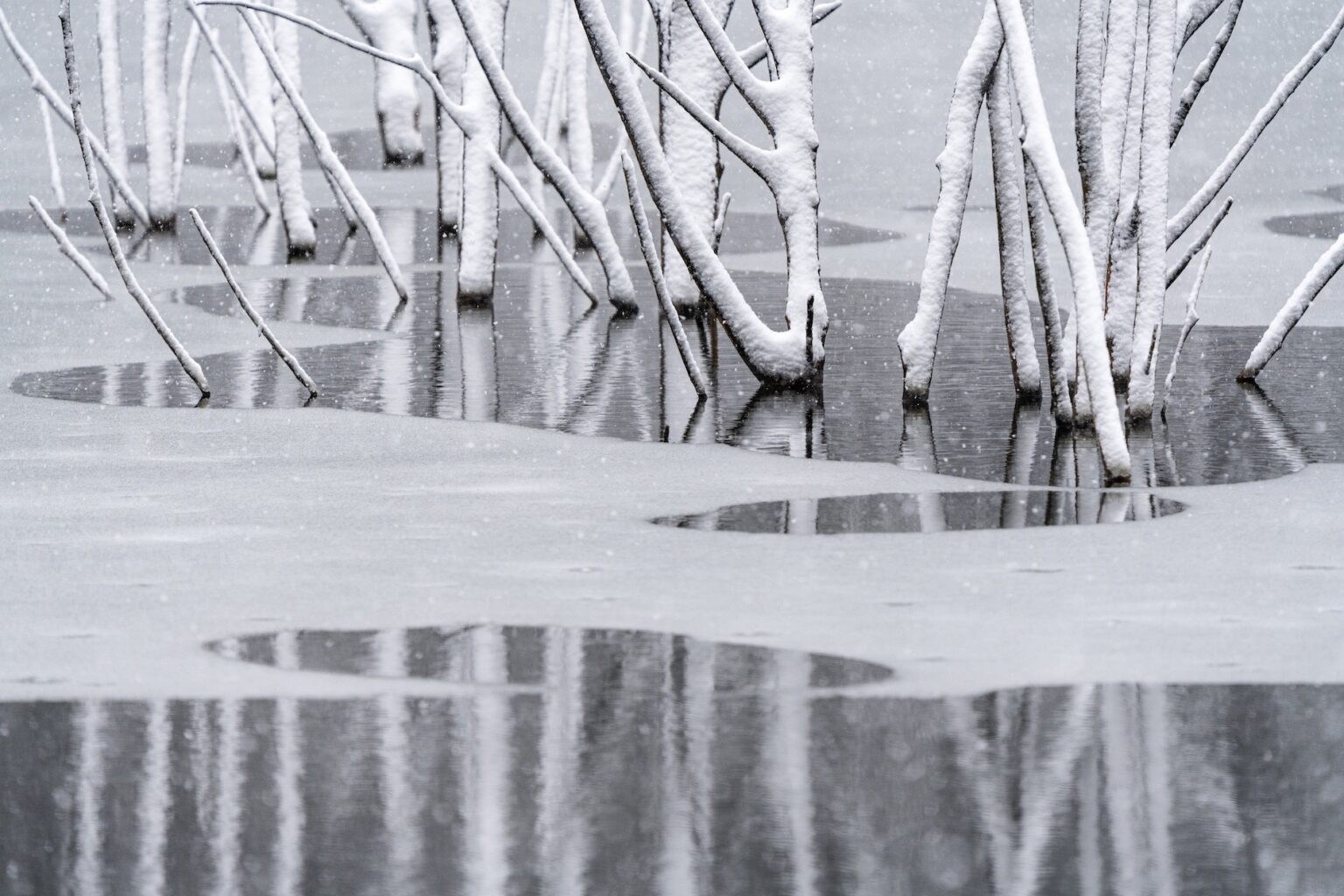
Cuejdel is the largest natural dam in Romania. It’s a young lake. There were landslides in the area, the first one in 1978 and the last one in 1990, and they created this new lake. It’s a big lake and there are areas where it’s 30m deep. You can see the trees in the water for now too. For me, it was a challenge to take photos there because, in my opinion, it’s a very difficult place to take pictures. You can learn a lot. You can train your eye for abstract photography. When people look at my photos, they may think it’s very easy to take images there because it’s a big area with a lot of trees in the water. But over the years many photographers have told me they never thought it would be so hard to take photos in this place.
Would you say Cuejdel is a less obviously beautiful place with lots of photographic potential?
It depends on the photographer, and whether they can see the beauty or not. It’s not obvious, it’s not easy, but if you are inspired, you can do amazing things there.
Is it a popular place for Romanians to visit?
It’s not that kind of place, like I saw recently with photos of the Dolomites in Italy, with so many tourists. There is a similar lake, called Lake Roșu, or the Red Lake, in Romania, which is very famous – everyone goes there. Cuejdel is known, but it’s not a tourist destination like that. It’s more remote. You have to hike. It’s not easy to get there – you need a car, and then you walk there. Maybe that’s the reason why there are not so many tourists. But these days, a lot of photographers come to visit the lake.
As well as landscapes, is there a lot of wildlife there?
Yes, we have a lot of wildlife in this area: bears, wolves, lynx… Romania is a very rich country for wildlife.
What did you set out to do photographically at Cuejdel?
At the beginning, I wanted to learn about my gear – my camera, my lenses, everything. But in time, I wanted to see if I could be creative and make something special in a place that for me was not such a big deal. Only later, when I saw the results, did I realise how important the place is. But for special results, you have to work a lot.
Does your approach change a lot in terms of what you look for when you move from traditional cameras to drones?
I always have the cameras and drones with me. What I use depends on the weather and the conditions. The drone opened up something new in this place for me. You need special conditions. To have those, you need to go to a place a lot. In the beginning I had periods of time when I was going daily to Cuejdel, but usually in special moments, maybe in winter or autumn, when I have a subject or something I think will inspire me.
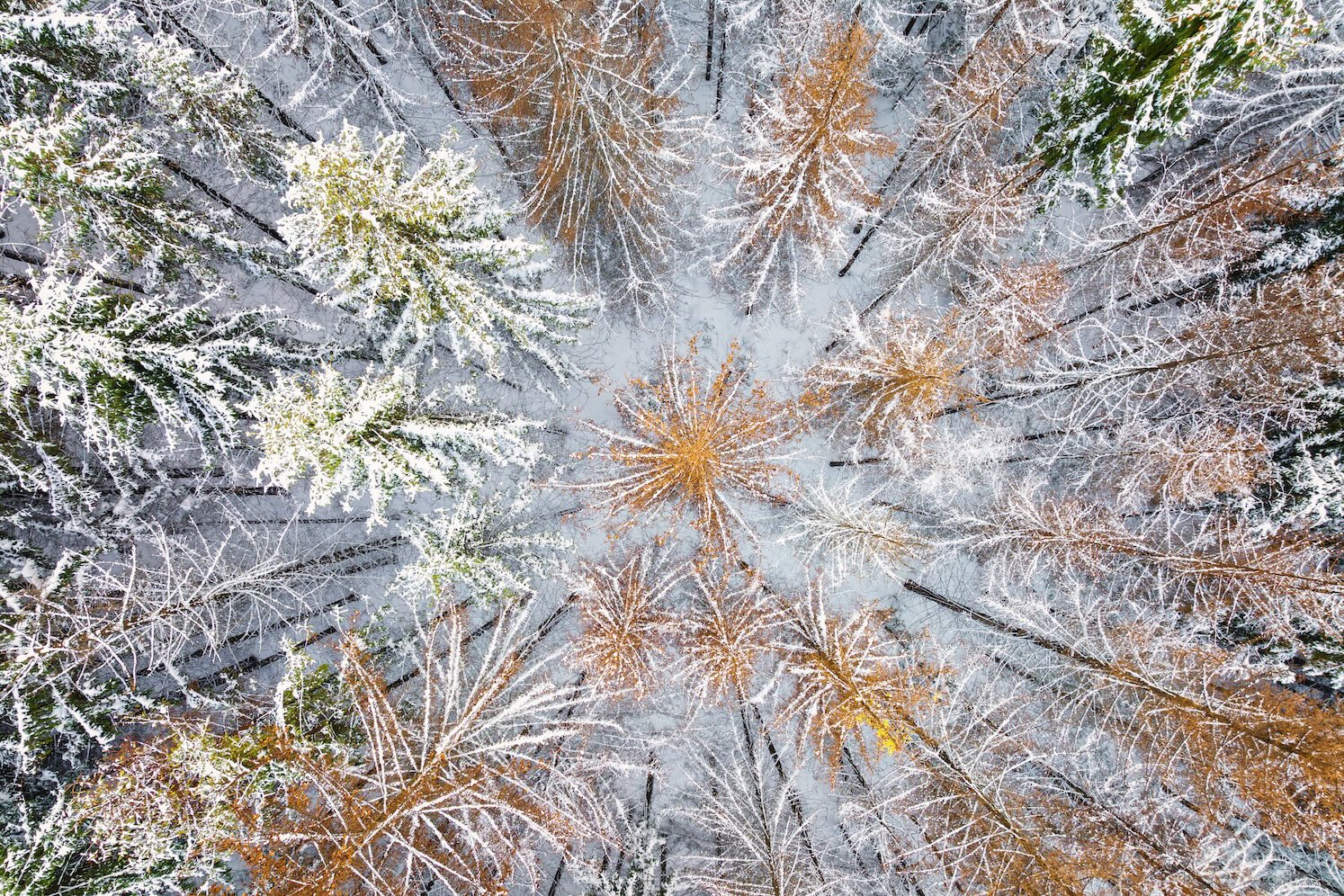
The drone opened a different perspective for me. The first time I said I need a drone was in 2016, when drones just started to appear in photography. I said that because I was at the lake in autumn and it was very colourful, but it started to snow. From a certain altitude, everything was white, and around the lake everything was colourful, so that was the first time I thought I could do better work with a drone. It was a great moment but still using classical landscape photography.
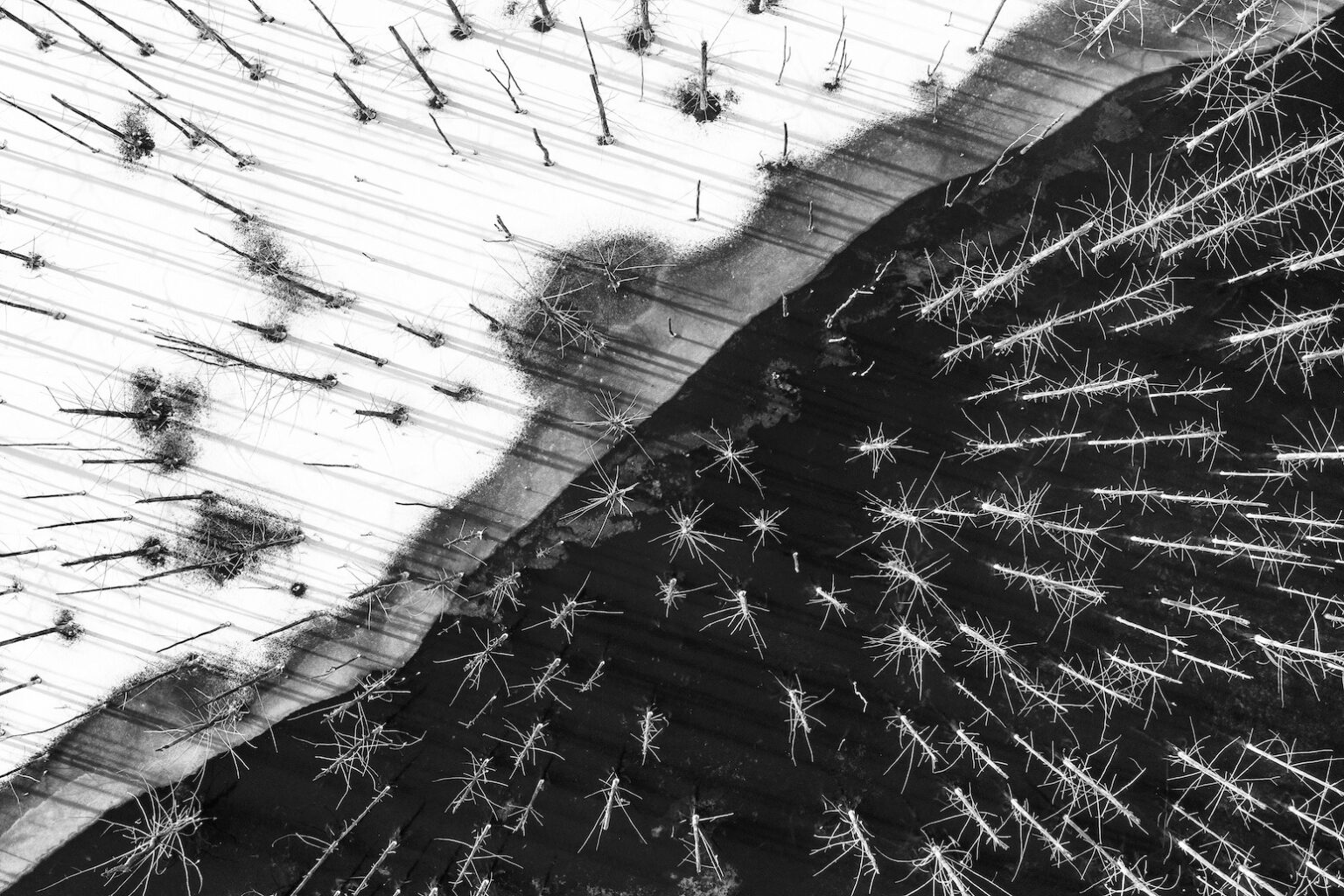
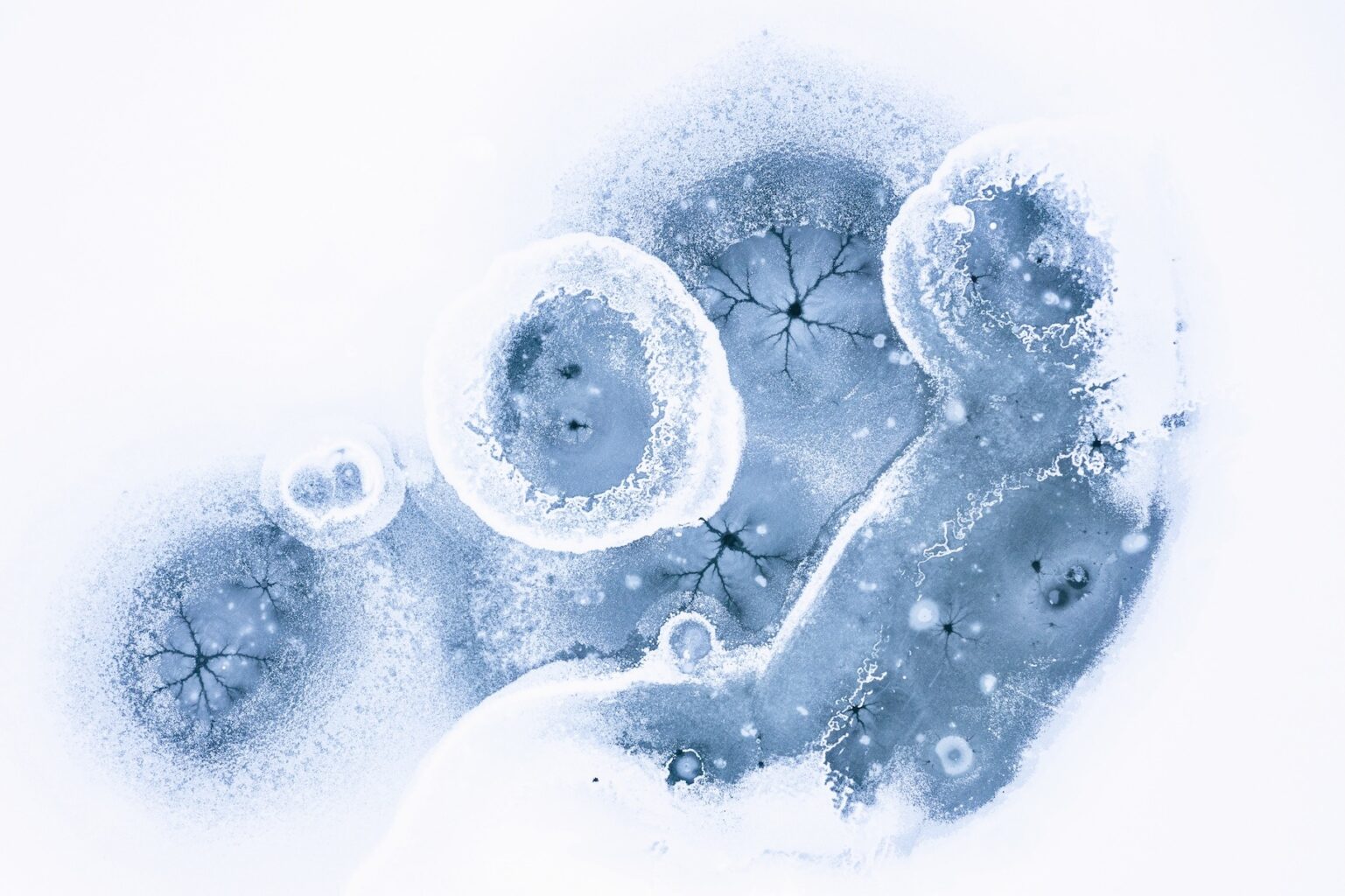
It was in winter when I really discovered abstract photography with a drone. It was a very cold morning, when the lake was frozen. In the first hour of the morning, I saw the shadows of the trees on the lake, but the lake was not covered with snow and not completely white. It was like snow that had melted and formed all kinds of abstract shapes on the lake, with shadows and lines. I had a lead, something to follow. It took me two or three years to create a series, which I called Ice Anatomy.
How much time have you spent at Cuejdel?
I started in 2010. After that, seriously, with a clear purpose to take great photos, it took me two years, from 2014 to 2016, to make the photo from my book’s cover. I thought this might be my only great photo, so my challenge was to see if I can do more. I wanted to prove it to myself. That’s why I kept trying.
Do you like taking a long-term approach and making repeat visits to the same location?
The most important thing is that you really understand a place. Over the years it’s very important to also understand yourself, such as how you react in certain conditions. Every time you go to a place, it’s not that you have nothing – if you stay at the lake five or 10 minutes, you have all kinds of ideas, like ‘If there is fog, I will try this’, and ‘If the lake is frozen, I could do this or that’. You are going and going until you find those moments, often even better than you thought you’d find.
You can read Gheorghe Popa’s full interview with Graeme Green in OP 324, available here. To order his book, Cuejdel: A Tale from the Carpathian Wilderness, visit gheorghepopa.com.